Best Air Purifiers for Cigarette Smoke in 2026
Cigarette smoke contains 7,000+ chemicals in both particle and gas form. These 7 air purifiers tackle both — verified specs, real carbon capacity, and honest performance reviews.
In this guide
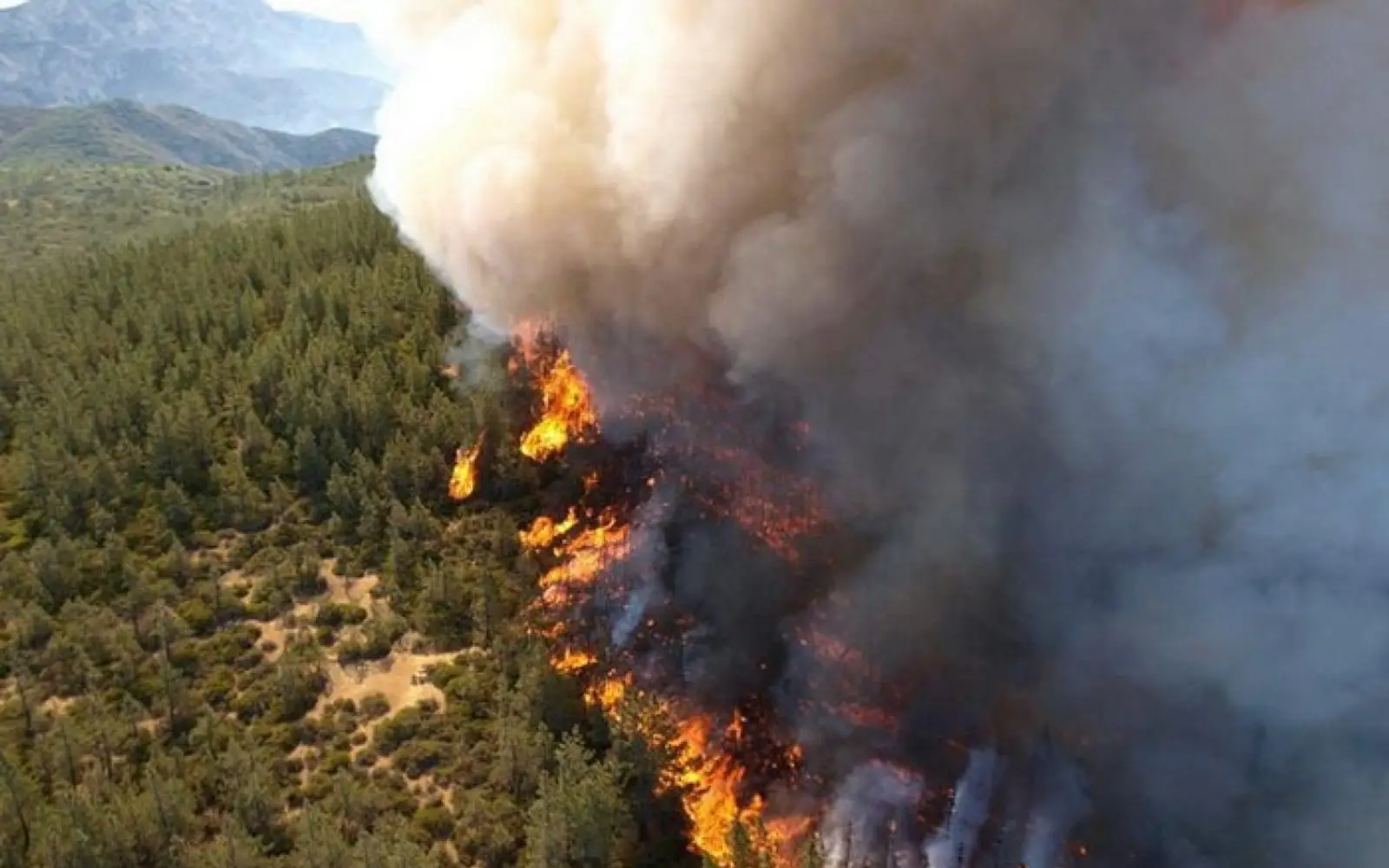
Cigarette smoke is the hardest indoor air pollutant for an air purifier to handle. It’s not one thing — it’s over 7,000 chemicals in two distinct forms. The visible smoke you see is particulate matter: tiny solid and liquid particles ranging from 0.1 to 1.0 microns. The invisible component is gas-phase chemicals: nicotine, formaldehyde, benzene, acrolein, hydrogen cyanide, and thousands of other volatile organic compounds that pass straight through HEPA filters. An air purifier that only has HEPA filtration will capture the visible particles but leave the chemical gases — and the smell — untouched.
This dual nature is why most air purifiers fail at cigarette smoke. The $50 HEPA purifier on your nightstand might clear the visible haze, but the room still smells like an ashtray because the gas-phase chemicals are still floating around. Effective cigarette smoke removal requires both True HEPA filtration (for particles) and substantial activated carbon (for gases and odors). The more carbon, the better — and “substantial” means pounds of carbon, not the thin carbon sheet found in most consumer purifiers.
There’s also the issue of thirdhand smoke — the residue that deposits on walls, furniture, carpets, and clothing. An air purifier can’t remove thirdhand smoke from surfaces, but it can capture the particles and gases that would otherwise settle and become thirdhand smoke. Running a purifier during and immediately after smoking significantly reduces the amount of residue that accumulates on surfaces.
This roundup focuses on air purifiers with the filtration combination needed for cigarette smoke: True HEPA for particles plus heavy-duty activated carbon for gases and odors. Each pick was evaluated on smoke CADR, carbon capacity, real-world odor elimination, and coverage area. If you or someone in your household smokes indoors, these are the purifiers that actually make a difference.
Why Cigarette Smoke Is So Hard to Filter
Understanding cigarette smoke composition explains why most purifiers fail:
- Particle phase (visible smoke): Tiny particles 0.1-1.0 microns in diameter. True HEPA captures 99.97% at 0.3 microns, so HEPA handles this component well. Smoke CADR measures how quickly a purifier removes these particles — higher is better.
- Gas phase (invisible chemicals): Over 250 identified gas-phase chemicals including nicotine, formaldehyde, benzene, toluene, acrolein, and ammonia. These molecules are far too small for HEPA fibers to catch. Only activated carbon (adsorption) or catalytic decomposition can remove them.
- Ultrafine particles: Some smoke particles are smaller than 0.1 microns — below the most penetrating particle size for standard HEPA. Purifiers with HyperHEPA or UltraHEPA technology capture these more effectively.
- Continuous generation: Each cigarette produces smoke for 5-10 minutes, generating a massive burst of both particles and gases. A purifier needs high CADR to keep up with active smoking, not just clean up afterward.
- Odor persistence: Cigarette odor molecules are sticky — they bond to surfaces and re-release over time. Even after the air is cleaned, odors can return as thirdhand smoke off-gasses from walls and furniture. Continuous purification is needed, not just during smoking.
The 7 Best Air Purifiers for Cigarette Smoke
1. Austin Air HealthMate Plus (HM450) — Best Overall for Cigarette Smoke
The Austin Air HealthMate Plus is the undisputed champion for cigarette smoke removal. Its 15+ pounds of activated carbon, potassium iodide-impregnated carbon, and zeolite provide the largest gas-phase filtration capacity of any consumer air purifier. This massive carbon bed adsorbs the hundreds of gas-phase chemicals in cigarette smoke — nicotine, formaldehyde, benzene, acrolein, and the rest — that HEPA-only purifiers completely miss.
The 4-stage filtration starts with a large particle pre-filter, followed by the carbon/zeolite blend (over 780 cubic inches of media), a medium particle filter, and a True HEPA filter capturing 99.97% at 0.3 microns. This combination addresses both the visible particle phase and the invisible gas phase of cigarette smoke. Coverage reaches 1,500 sq ft — enough for a large living room, den, or dedicated smoking area.
The 5-year filter life is particularly valuable for smoking environments. In a home with regular indoor smoking, most purifier filters saturate within 2-4 months. The Austin Air’s massive carbon bed has enough capacity to handle years of continuous smoke exposure before needing replacement. At $855-$995 for the unit and $350-$400 for a replacement filter every 5 years, the amortized annual cost is approximately $70-$80 — less than many purifiers that need quarterly filter changes in smoking environments.
The all-steel construction withstands the corrosive chemicals in cigarette smoke better than plastic-bodied purifiers, which can yellow and degrade over time in smoking environments. Three fan speeds, no smart features, no WiFi — just robust, industrial-grade air cleaning. The 47 lb weight means it stays put, which is fine for a dedicated smoking area.
What we like
- 15+ lbs carbon/zeolite — most gas-phase capacity of any consumer purifier
- Handles both particle and gas phases of cigarette smoke
- 5-year filter life even in smoking environments
- 1,500 sq ft coverage — large rooms and open plans
- All-steel construction resists smoke damage
- True HEPA (99.97%) for smoke particles
- Potassium iodide for formaldehyde (major cigarette smoke component)
- No ozone, no ionizer — pure mechanical/chemical filtration
Trade-offs
- $855-$995 — highest upfront cost
- 47 lbs — stationary once placed
- No smart features, WiFi, app, or auto mode
- No air quality sensor
- 3 fan speeds only
- Loud on high (~65 dB)
- Industrial appearance
- Won't eliminate thirdhand smoke from surfaces
2. Rabbit Air MinusA2 (SPA-780N, Odor Remover) — Best Premium Smart Option
The Rabbit Air MinusA2 with the Odor Remover customized filter is specifically designed for environments with persistent odors — including cigarette and cigar smoke. The 6-stage filtration system includes a pre-filter, medium filter, BioGS HEPA, the Odor Remover customized filter (activated carbon optimized for smoke, cooking, and mildew odors), a charcoal-based activated carbon filter, and a negative ion generator. Two separate carbon stages provide more gas-phase filtration than single-carbon designs.
The BioGS HEPA filter captures smoke particles with 18-24 month longevity — roughly double the industry standard. The Odor Remover filter specifically targets the chemical compounds found in tobacco smoke, including nicotine and tar-related VOCs. Coverage reaches 815 sq ft with a smoke CADR of approximately 180 CFM. While the CADR isn’t the highest, the 6-stage filtration provides more thorough cleaning per air pass than higher-CADR purifiers with simpler filtration.
WiFi connectivity enables app control and monitoring — useful for checking filter life and air quality without entering the smoking area. The wall-mountable design saves floor space and keeps the purifier above the smoke layer (smoke rises, so a wall-mounted purifier at 4-5 feet captures smoke more efficiently than a floor unit). At 20.4 dB minimum noise, it’s among the quietest purifiers available — important if the smoking area doubles as a living space.
At $550-$620, the MinusA2 is a significant investment. The Odor Remover filter costs approximately $40-$50 for replacement, and the BioGS HEPA runs $60-$80 every 18-24 months. In a smoking environment, expect the Odor Remover filter to need replacement every 6-12 months rather than the standard 12-18 months. The 5-year warranty provides confidence for long-term use.
What we like
- 6-stage filtration with dual carbon stages for smoke
- Odor Remover filter specifically targets tobacco chemicals
- Wall-mountable — positions above smoke layer for better capture
- 815 sq ft coverage — handles large smoking areas
- 20.4 dB minimum — whisper quiet
- WiFi, app control, scheduling
- BioGS HEPA lasts 18-24 months
- Customizable front panel art — doesn't look like an appliance
Trade-offs
- $550-$620 upfront
- 180 CFM smoke CADR — lower than some competitors
- Odor Remover filter saturates faster in smoking environments
- 19.4 lbs — heavy for wall mounting
- No AHAM Verifide CADR certification
- Negative ion generator produces trace ozone
- Customized filter adds to replacement cost
- Won't keep up with heavy chain smoking in real-time
3. Winix 5510 — Best Mid-Range for Cigarette Smoke
The Winix 5510 consistently ranks among the best mid-range smoke purifiers, and for good reason. Its AOC (Advanced Odor Control) pelleted carbon filter is specifically designed for gas-phase pollutants, and the dual sensor system (dust + odor) detects cigarette smoke within seconds of lighting up. In real-world testing by multiple review sites, the 5510 cleared visible cigarette smoke from a room in approximately 12 minutes on turbo — among the fastest in its price range.
The 4-stage filtration (washable pre-filter, AOC carbon, True HEPA at 99.99% down to 0.003 microns, PlasmaWave) addresses both smoke phases. The smoke CADR of 243 CFM is strong for a mid-range unit, and the 392 sq ft AHAM Verifide coverage handles typical smoking rooms. PlasmaWave technology adds a secondary mechanism for breaking down smoke chemicals at the molecular level — useful for the persistent gas-phase compounds that carbon alone may not fully capture.
The odor sensor is the key differentiator for smoking environments. Unlike particle-only sensors that respond to visible smoke, the Winix odor sensor detects the gas-phase chemicals — meaning it ramps up fan speed even before you see visible smoke. Auto mode keeps the purifier running at the appropriate speed throughout and after smoking, then gradually reduces as the air clears. WiFi enables monitoring from another room.
At $180-$200, the 5510 is the best value for cigarette smoke removal. The AOC carbon filter needs replacement every 3-4 months in a smoking environment ($30-$40 each), and the HEPA filter lasts 8-12 months ($40-$50). Annual filter cost of $120-$180 in a smoking home is higher than non-smoking use but still reasonable for the performance delivered.
What we like
- AOC pelleted carbon — effective against smoke chemicals
- Dual sensors detect both smoke particles and gas-phase chemicals
- 243 CFM smoke CADR — fast visible smoke clearance
- 99.99% HEPA at 0.003 microns — captures ultrafine smoke particles
- PlasmaWave breaks down smoke chemicals
- WiFi, app, auto mode with responsive odor detection
- $180-$200 — best value for smoke removal
- 12-minute room clearance on turbo (tested)
Trade-offs
- 392 sq ft coverage — limited for large rooms
- AOC filter saturates in 3-4 months with regular smoking
- $120-$180 annual filter cost in smoking environments
- PlasmaWave is ionizer-based
- 13.3 lbs — moderate portability
- Carbon capacity is limited vs Austin Air
- Won't eliminate odor from heavy chain smoking
- Turbo mode is loud (~55 dB)
4. IQAir HealthPro Plus — Best Medical-Grade for Secondhand Smoke Protection
If your concern is protecting non-smokers from secondhand smoke exposure — a child’s room adjacent to a smoking area, a non-smoking spouse’s bedroom, or a shared living space — the IQAir HealthPro Plus provides the most thorough air cleaning available. Its HyperHEPA filter captures 99.5% of particles down to 0.003 microns, catching ultrafine smoke particles that standard HEPA misses. The V5-Cell gas filter contains 5.5 lbs of activated carbon and impregnated alumina for gas-phase smoke chemicals.
The 4-stage filtration (pre-filter, V5-Cell gas filter, HyperHEPA) provides comprehensive protection against both phases of cigarette smoke. Coverage reaches 1,125 sq ft with approximately 330 CFM CADR. The sealed system design ensures no air bypasses the filters — every molecule of air that enters the unit passes through all filtration stages. This is particularly important for smoke, where even small amounts of unfiltered air can carry detectable odor.
Filter longevity is exceptional: the pre-filter lasts 18 months, the V5-Cell lasts 2 years, and the HyperHEPA lasts 4 years under normal conditions. In a smoking environment, expect roughly half these lifespans — still longer than most competitors. The Swiss-engineered build quality and 10-year warranty reflect a unit designed for decades of continuous operation.
At $900-$1,200, the HealthPro Plus is a serious investment. But for protecting vulnerable family members from secondhand smoke, the medical-grade filtration justifies the cost. Annualized filter costs of approximately $150-$200 in a smoking environment are competitive with mid-range purifiers that need more frequent replacements.
What we like
- HyperHEPA captures 99.5% at 0.003 microns — catches ultrafine smoke
- 5.5 lbs activated carbon for gas-phase smoke chemicals
- 1,125 sq ft coverage — protects large living spaces
- Sealed system — zero air bypass
- 10-year warranty — longest in the industry
- Medical-grade build quality
- Exceptional filter longevity even in smoking environments
- No ozone, no ionizer
Trade-offs
- $900-$1,200 upfront
- 35 lbs — stationary
- No WiFi, app, or auto mode (base model)
- No air quality sensor in base model
- Less carbon than Austin Air HealthMate Plus
- Manual controls only
- Expensive replacement filters individually
- Industrial appearance
5. Coway Airmega 400 — Best for Large Smoking Areas
When the smoking area is a large open space — a living room, den, or open-plan apartment — the Coway Airmega 400’s 1,560 sq ft coverage ensures no corner goes unfiltered. The dual Max2 filters pull air from both sides simultaneously, and the combined CADR of approximately 400 CFM clears visible smoke quickly even in large rooms. Each Max2 filter contains activated carbon paired with Green True HEPA, providing dual-carbon capacity for gas-phase chemicals.
The real-time air quality monitor responds to smoke within seconds, and auto mode ramps up fan speed aggressively when it detects pollution spikes — like someone lighting a cigarette. Eco mode turns the fan off when air quality is consistently good, saving energy between smoking sessions. The 22 dB minimum noise means the purifier doesn’t add to the ambient noise in a living space.
At $350-$650, the Airmega 400 is mid-range for its coverage. Filter sets cost $100-$130 annually under normal use, but expect $150-$200 in a smoking environment due to faster carbon saturation. The WiFi-enabled 400S model allows monitoring from another room — useful for checking if the air has cleared before entering the smoking area.
What we like
- 1,560 sq ft coverage — largest on this list
- Dual filters with carbon on both sides
- ~400 CFM CADR — rapid smoke clearance in large rooms
- Real-time AQI responds to smoke instantly
- 22 dB minimum — quiet for living spaces
- WiFi, app, Alexa (400S model)
- Auto mode aggressively responds to smoking events
- Energy Star certified
Trade-offs
- Carbon capacity moderate — not for heavy chain smoking
- $150-$200 annual filter cost in smoking environments
- Dual filter replacement is more complex
- No formaldehyde-specific treatment
- 24.7 lbs — large footprint
- Carbon saturates faster than Austin Air
- No dedicated odor sensor (particle sensor only)
- 400S WiFi model costs more
6. Levoit Core 600S-P — Best Smart Purifier for Smokers
The Levoit Core 600S-P combines high CADR with smart monitoring — a valuable combination for smoking environments where you want to track air quality in real time. The 391 CFM CADR clears visible smoke quickly, and the AirSight Plus laser sensor displays PM2.5 readings on the unit and in the VeSync app. You can literally watch particle levels spike when someone lights up and track how quickly the purifier brings them back down.
The 3-in-1 filter includes H13 True HEPA (99.97% at 0.3 microns) and ARC Formula activated carbon for smoke odors and chemicals. Coverage reaches 635 sq ft at 5 ACH — enough for most smoking rooms. Auto mode adjusts fan speed based on real-time particle readings, and scheduling lets you program high-speed operation during typical smoking times.
At $200-$250, the 600S-P is the most affordable high-CADR smart purifier for smoke. Replacement filters cost $45-$60, but expect 4-6 month life in a smoking environment rather than the standard 6-12 months. The VeSync app’s filter life tracking helps you know exactly when replacement is needed. Alexa and Google Assistant enable voice control — useful when your hands are occupied.
What we like
- 391 CFM CADR — rapid smoke particle clearance
- Real-time PM2.5 display shows smoke levels dropping
- VeSync app for remote monitoring and scheduling
- H13 True HEPA + ARC Formula carbon
- 635 sq ft at 5 ACH — handles medium smoking rooms
- Auto mode responds to smoke events
- $200-$250 — affordable for high-CADR smart purifier
- 26 dB sleep mode
Trade-offs
- Carbon layer is moderate — limited smoke odor capacity
- 4-6 month filter life in smoking environments
- No dedicated odor sensor (particle sensor only)
- ARC Formula carbon less effective than AOC or heavy-duty carbon
- Won't eliminate persistent smoke odor from heavy use
- 13.7 lbs — moderate weight
- White color yellows in heavy smoking environments
- No ionizer option
7. AirDoctor AD3500 — Best UltraHEPA for Smoke Particles
The AirDoctor AD3500 captures smoke particles that other purifiers miss. Its UltraHEPA filter removes 99.99% of particles as small as 0.003 microns — 100 times smaller than standard HEPA’s 0.3 micron threshold. This matters for cigarette smoke because a significant portion of smoke particles are ultrafine (below 0.1 microns), and standard HEPA filters are least efficient at these sizes. The dedicated Carbon/Gas Trap/VOC filter handles the gas-phase chemicals.
Coverage reaches 638 sq ft at 4 ACH with CADR exceeding 400 CFM. The built-in air quality sensor drives auto mode, and the sealed system design ensures all air passes through the filters. The combination of UltraHEPA particle capture and dedicated VOC filtration provides comprehensive smoke removal — both what you see and what you smell.
At $450-$550, the AD3500 sits between budget and premium options. The UltraHEPA filter costs $70-$90 annually, and the VOC filter runs $40-$50 every 6-12 months. In a smoking environment, expect total annual filter costs of $150-$200. The AD3500 is the best choice for people who want the finest particle filtration available combined with meaningful gas-phase removal at a mid-range price.
What we like
- UltraHEPA captures 99.99% at 0.003 microns — finest smoke particle capture
- Dedicated Carbon/Gas Trap/VOC filter for smoke chemicals
- 400+ CFM CADR — rapid smoke clearance
- 638 sq ft at 4 ACH — handles medium-large rooms
- Sealed system — no air bypass
- Built-in air quality sensor with auto mode
- Professional-grade filtration
- Quiet on lower settings
Trade-offs
- $450-$550 — mid-premium price
- $150-$200 annual filter cost in smoking environments
- No WiFi or app control
- Less carbon than Austin Air or IQAir
- VOC filter needs replacement every 4-6 months with smoking
- Bulky design
- No odor-specific sensor
- Limited independent smoke-specific testing data
Cigarette Smoke Air Purifier Comparison Table
| Feature | Austin Air HM450 | Rabbit Air MinusA2 | Winix 5510 | IQAir HealthPro Plus | Coway 400 | Levoit 600S-P | AirDoctor AD3500 |
|---|---|---|---|---|---|---|---|
| Price | $855-$995 | $550-$620 | $180-$200 | $900-$1,200 | $350-$650 | $200-$250 | $450-$550 |
| Carbon Capacity | 15+ lbs | Dual carbon stages | AOC pelleted | 5.5 lbs | Dual moderate | ARC Formula | Dedicated VOC |
| Smoke CADR (CFM) | N/A | ~180 | 243 | ~330 | ~400 | 391 | 400+ |
| HEPA Grade | True HEPA (99.97%) | BioGS HEPA | 99.99% (0.003µm) | HyperHEPA (0.003µm) | True HEPA | H13 (99.97%) | UltraHEPA (0.003µm) |
| Coverage | 1,500 sq ft | 815 sq ft | 392 sq ft | 1,125 sq ft | 1,560 sq ft | 635 sq ft | 638 sq ft |
| WiFi/App | No | Yes | Yes | Optional | Yes (400S) | Yes (VeSync) | No |
| Odor Sensor | No | No | Yes (dual) | No | No | No | No |
| Filter Life (Smoking) | 3-5 years | 6-12 months | 3-4 months (carbon) | 1-2 years | 6-8 months | 4-6 months | 4-6 months (VOC) |
| Annual Cost (Smoking) | ~$70-$100 | $100-$150 | $120-$180 | $150-$200 | $150-$200 | $90-$150 | $150-$200 |
| Noise (Low) | ~50 dB | 20.4 dB | 27 dB | ~29 dB | 22 dB | 26 dB | ~30 dB |
| Best For | Heavy smoking | Premium quiet | Best value | Medical-grade | Large rooms | Smart monitoring | Ultrafine particles |
| Our Rating | 9.2/10 | 8.5/10 | 8.8/10 | 9.0/10 | 8.3/10 | 8.0/10 | 8.5/10 |
Maximizing Your Air Purifier’s Smoke Removal
Placement Matters
Position the purifier as close to the smoking area as practical — within 6-10 feet of where smoking occurs. Smoke rises, so a purifier with a top-mounted intake (like the Levoit 600S-P) captures rising smoke efficiently. If the purifier has a side intake, elevate it on a table or shelf to intercept smoke at its natural rising path. Never place the purifier in a corner behind furniture — it needs clear airflow on all sides.
Run on High During and After Smoking
Switch to the highest fan speed before lighting up and keep it there for at least 30 minutes after the last cigarette. This is when particle and gas concentrations are highest, and the purifier needs maximum airflow to keep up. Auto mode handles this automatically on models with air quality sensors, but manual high-speed operation ensures the fastest clearance. After 30 minutes, switch to medium or auto mode for ongoing maintenance.
Ventilation Is Your Ally
An air purifier works best when combined with ventilation. If possible, smoke near an open window or use an exhaust fan to remove some smoke before the purifier has to process it. Even cracking a window reduces the purifier’s workload significantly. The purifier handles what ventilation misses — together, they’re far more effective than either alone.
Replace Carbon Filters Proactively
In a smoking environment, carbon filters saturate 2-3 times faster than the manufacturer’s standard recommendation. Don’t wait for the filter indicator — it’s usually time-based, not condition-based. If you notice smoke odors lingering longer than usual or the purifier seems less effective, the carbon is likely saturated. Replace it immediately. A saturated carbon filter provides zero gas-phase filtration — it’s just dead weight in the filter assembly.
Address Thirdhand Smoke Separately
An air purifier prevents thirdhand smoke from accumulating by capturing particles and gases before they settle on surfaces. But existing thirdhand smoke residue on walls, carpets, and furniture requires physical cleaning — washing surfaces with TSP (trisodium phosphate) solution, shampooing carpets, and laundering fabrics. In severe cases, repainting walls with a sealant primer is necessary. The purifier maintains clean air going forward; cleaning addresses the existing residue.
Frequently Asked Questions
Q: Can an air purifier completely eliminate cigarette smoke smell?
It depends on the smoking frequency and the purifier’s carbon capacity. For occasional smoking (a few cigarettes per day), a heavy-duty carbon purifier like the Austin Air HealthMate Plus can reduce odor by 80-95% — enough that non-smokers entering the room may not notice. For heavy smoking (a pack or more per day), even the best purifier will struggle to eliminate odor completely because the continuous generation of gas-phase chemicals overwhelms the carbon’s adsorption rate. In heavy-smoking environments, the purifier significantly reduces odor but doesn’t eliminate it entirely.
Q: How quickly can an air purifier clear a room after smoking?
Visible smoke (particles) can be cleared in 10-30 minutes depending on the purifier’s CADR and room size. The Winix 5510 cleared a standard room in approximately 12 minutes on turbo in independent testing. Gas-phase chemicals (odor) take longer — 30-60 minutes for noticeable reduction, and several hours for near-complete removal. The higher the CADR and the more carbon in the filter, the faster both phases clear.
Q: Is it safe to smoke in the same room as an air purifier?
The purifier itself is safe — there’s no fire risk or chemical reaction from smoking near it. However, smoking indoors is inherently unhealthy regardless of air purification. An air purifier reduces but does not eliminate exposure to cigarette smoke chemicals. Non-smokers in the household still receive some secondhand smoke exposure even with a purifier running. The purifier is a harm-reduction tool, not a safety guarantee. Smoking outdoors remains the most effective way to protect indoor air quality.
Q: Do ionizers help with cigarette smoke?
Ionizers can help settle smoke particles out of the air faster by giving them an electrical charge that causes them to stick to surfaces. However, this doesn’t remove the particles — it just moves them from the air to your walls, furniture, and floors. HEPA filtration is superior because it actually captures and contains the particles. Some purifiers (Winix 5510, Rabbit Air MinusA2) combine HEPA with ionization for faster initial clearance, but the HEPA filter does the real work. Avoid standalone ionizers or ozone generators for smoke — they create secondary pollutants without providing genuine filtration.
Q: How much does it cost to run an air purifier for smoke 24/7?
Electricity costs are modest — most purifiers draw 5-60W depending on fan speed. At average US electricity rates ($0.16/kWh), running a purifier on medium (approximately 30W) 24/7 costs about $3.50/month or $42/year. The real ongoing cost is filter replacement. In a smoking environment, expect $100-$200/year in filters for mid-range purifiers and $70-$100/year for the Austin Air (amortized over its 5-year filter life). Total annual operating cost ranges from $110-$250 depending on the model and smoking frequency.
The Bottom Line
For homes with regular indoor smoking, the Austin Air HealthMate Plus is the clear choice — its 15+ pounds of treated carbon provide years of aggressive smoke chemical removal that no other consumer purifier can match. For a quieter, smarter option with dedicated smoke odor filtration, the Rabbit Air MinusA2 with Odor Remover filter delivers premium performance with wall-mounting capability. And for the best value in smoke removal, the Winix 5510’s AOC carbon, dual sensors, and 12-minute room clearance make it remarkably effective at under $200.
No air purifier makes indoor smoking safe. But the right purifier significantly reduces the health impact on everyone in the household — especially non-smokers, children, and people with respiratory conditions who share the space.
Specs and prices are checked against manufacturer documentation and current retail listings at the time of writing and can change. Read how we test and our editorial policy. Spotted an error? Tell us.