Levoit vs Winix Air Purifier: Budget Battle Worth Watching
Levoit's smart app ecosystem vs Winix's proven PlasmaWave filtration. We compare specs, CADR, noise, filters, and long-term costs to find the better budget air purifier brand.
In this guide
Levoit and Winix are the two brands that dominate the budget-to-midrange air purifier market, and for good reason. Both deliver genuine True HEPA filtration at prices that undercut premium brands like Dyson and IQAir by hundreds of dollars. But they take distinctly different approaches to air purification. Levoit has built its empire on smart connectivity, sleek cylindrical designs, and an aggressive pricing strategy that’s made it the best-selling air purifier brand on Amazon. Winix has earned its reputation through decades of proven filtration technology, its proprietary PlasmaWave system, and washable carbon filters that reduce long-term costs.
This comparison focuses on the models most buyers are actually choosing between: the Levoit Core 300S ($100-$150) and Core 400S ($180-$220) against the Winix 5500-2 ($150-$180) and Winix AM90 ($180-$230). We’ll break down filtration performance, coverage, noise, smart features, filter costs, and overall value to help you decide which brand deserves your money.
Brand Overview
Levoit
Levoit launched in 2017 and has rapidly become the dominant air purifier brand in the US consumer market. The company’s strategy is straightforward: pack smart features, app control, and voice assistant compatibility into compact, attractive units at aggressive price points. The Core series — spanning the entry-level Core 200S through the large-room Core 600S — covers virtually every room size and budget. Levoit purifiers use 3-stage filtration (pre-filter, activated carbon, True HEPA) with the VeSync app providing remote control, scheduling, and air quality monitoring. The brand is Energy Star certified across most models and has earned AHAM Verifide certification for published CADR ratings.
Key Levoit strengths: VeSync app with real-time PM2.5 monitoring, Alexa and Google Assistant compatibility, QuietKEAP noise reduction technology (as low as 22 dB on some models), compact cylindrical designs, competitive pricing, and a wide model range from $50 to $350.
Winix
Winix is a South Korean company that’s been manufacturing air purification products since 1973 — over five decades of experience in the category. While Levoit wins on marketing and smart features, Winix brings engineering depth and a proprietary technology that no other budget brand offers: PlasmaWave. This bipolar ionization technology creates hydroxyls that break down pollutants at the molecular level without producing harmful ozone (certified ozone-free by CARB). Winix purifiers use a 4-stage filtration system that adds PlasmaWave on top of the standard pre-filter, carbon, and HEPA stages. The brand’s 5500-2 model has been a Wirecutter recommendation and a consistent top performer in independent testing.
Key Winix strengths: PlasmaWave technology (additional pollutant neutralization), washable AOC (Advanced Odor Control) carbon filters, AHAM Verifide CADR ratings, proven track record in independent testing, 4-stage filtration, and strong performance in the 300-400 sq ft range.
Head-to-Head: Levoit Core 400S vs Winix 5500-2
These are the most directly comparable models from each brand — both targeting medium-to-large rooms in the $150-$220 price range.
Filtration Technology
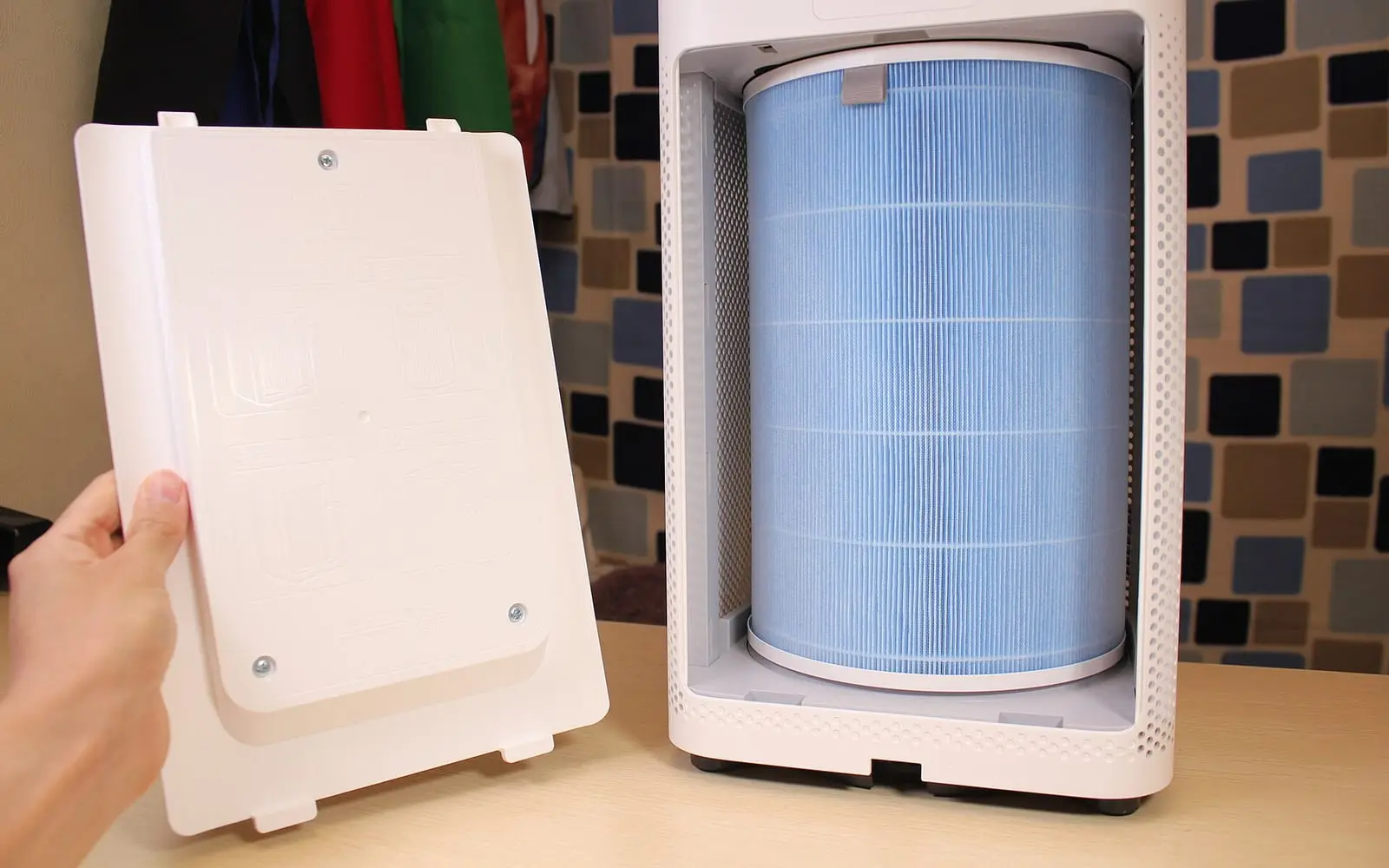
The Levoit Core 400S uses a 3-stage filtration system: a washable pre-filter captures large particles like hair and lint, an activated carbon layer absorbs VOCs and odors, and a True HEPA filter captures 99.97% of particles down to 0.3 microns. The system is effective and straightforward — mechanical filtration with carbon adsorption, no additional technologies. Levoit’s AirSight Plus laser sensor monitors PM2.5 levels in real time and feeds data to the VeSync app.
The Winix 5500-2 uses a 4-stage system: a washable fine mesh pre-filter, a washable AOC (Advanced Odor Control) carbon filter made from activated carbon granules, a True HEPA filter (99.97% at 0.3 microns), and PlasmaWave technology. The PlasmaWave stage generates hydroxyl radicals that neutralize bacteria, viruses, and chemical vapors at the molecular level. Winix’s smart sensor detects odors and particles, driving the auto mode and the 3-color air quality LED indicator.
The key difference: Winix adds a fourth filtration stage (PlasmaWave) that Levoit doesn’t match. PlasmaWave is CARB-certified ozone-free and provides an additional layer of pollutant neutralization beyond what mechanical HEPA filtration alone can achieve. However, some users prefer to disable PlasmaWave and rely purely on mechanical filtration — the 5500-2 includes a button to toggle it off. Levoit counters with a more advanced particle sensor (laser-based PM2.5) versus Winix’s simpler odor/particle sensor.
CADR and Coverage
Levoit Core 400S: CADR of approximately 200 CFM (AHAM Verifide), covering rooms up to 403 sq ft with 5 air changes per hour. The unit can handle rooms up to approximately 1,980 sq ft with 1 air change per hour, though 5 ACH is the standard for effective purification.
Winix 5500-2: CADR of approximately 232 CFM for smoke, 243 for dust, and 246 for pollen (AHAM Verifide), covering rooms up to 360 sq ft with 5 air changes per hour. Despite the smaller rated coverage area, the Winix actually moves more air per minute — its higher CADR means faster air cleaning within its rated space.
This is an interesting split. Levoit claims a larger coverage area (403 vs 360 sq ft), but Winix has higher raw CADR numbers. The difference comes down to how each brand calculates coverage. For rooms under 350 sq ft, both perform excellently. For rooms 350-400 sq ft, the Levoit’s coverage claim gives it a slight edge on paper, though the Winix’s higher CADR suggests it cleans air faster within its rated zone.
Smart Features and Connectivity
This is where Levoit dominates. The Core 400S connects via WiFi to the VeSync app, providing real-time PM2.5 readings, historical air quality data, filter life tracking, scheduling, and remote control from anywhere. It works with Amazon Alexa and Google Assistant for voice commands — “Alexa, set air purifier to sleep mode” actually works. The app displays a numerical PM2.5 reading and color-coded air quality indicator, giving you granular data about your indoor air.
The Winix 5500-2 has no WiFi, no app, and no voice assistant support. It has a basic air quality sensor that drives the 3-color LED indicator and auto mode, but there’s no way to check air quality data remotely or set schedules through a phone. The Winix AM90 ($180-$230) adds WiFi and Alexa support if smart features are important to you, but the base 5500-2 is a manual-control purifier.
If app control, remote monitoring, and voice commands matter to you, Levoit wins this category decisively. If you just want a purifier that runs effectively without needing a phone, Winix’s auto mode handles the basics well.
Noise Levels
Levoit Core 400S: Approximately 24 dB on the lowest setting, up to approximately 52 dB on high. Levoit’s QuietKEAP technology keeps the low settings genuinely whisper-quiet — 24 dB is essentially inaudible in a typical room.
Winix 5500-2: Approximately 27.8 dB on the lowest setting, up to approximately 54 dB on high. The low setting is quiet but not quite as silent as the Levoit. Independent testing from Tom’s Guide measured the 5500-2 at 35.3 dB on low and 59.8 dB on high, though these measurements may vary by testing methodology.
Levoit has a slight edge on noise, particularly at the lowest fan speeds. For bedroom use where every decibel matters, the Core 400S’s 24 dB sleep mode is noticeably quieter than the Winix’s low setting. On higher speeds, both units produce noticeable fan noise — neither is silent at maximum output.
Filter Costs and Maintenance
This is where Winix fights back hard:
Levoit Core 400S:
- Replacement filter (HEPA + carbon combined): $35-$45
- Replacement cycle: Every 6-8 months depending on usage
- Annual filter cost: Approximately $55-$90
- Pre-filter: Integrated, not separately replaceable on most models
Winix 5500-2:
- Replacement HEPA filter: $40-$55
- Carbon filter: Washable AOC — no replacement needed (lasts the life of the unit)
- Replacement cycle: HEPA every 12 months
- Annual filter cost: Approximately $40-$55
- Pre-filter: Washable, no replacement needed
Winix’s washable AOC carbon filter is a genuine cost advantage. While Levoit’s combined HEPA+carbon filter needs full replacement every 6-8 months, Winix’s carbon filter just needs periodic washing. Over 5 years, this saves $100-$200 in filter costs. The Winix pre-filter is also washable, adding to the long-term savings.
Design and Build
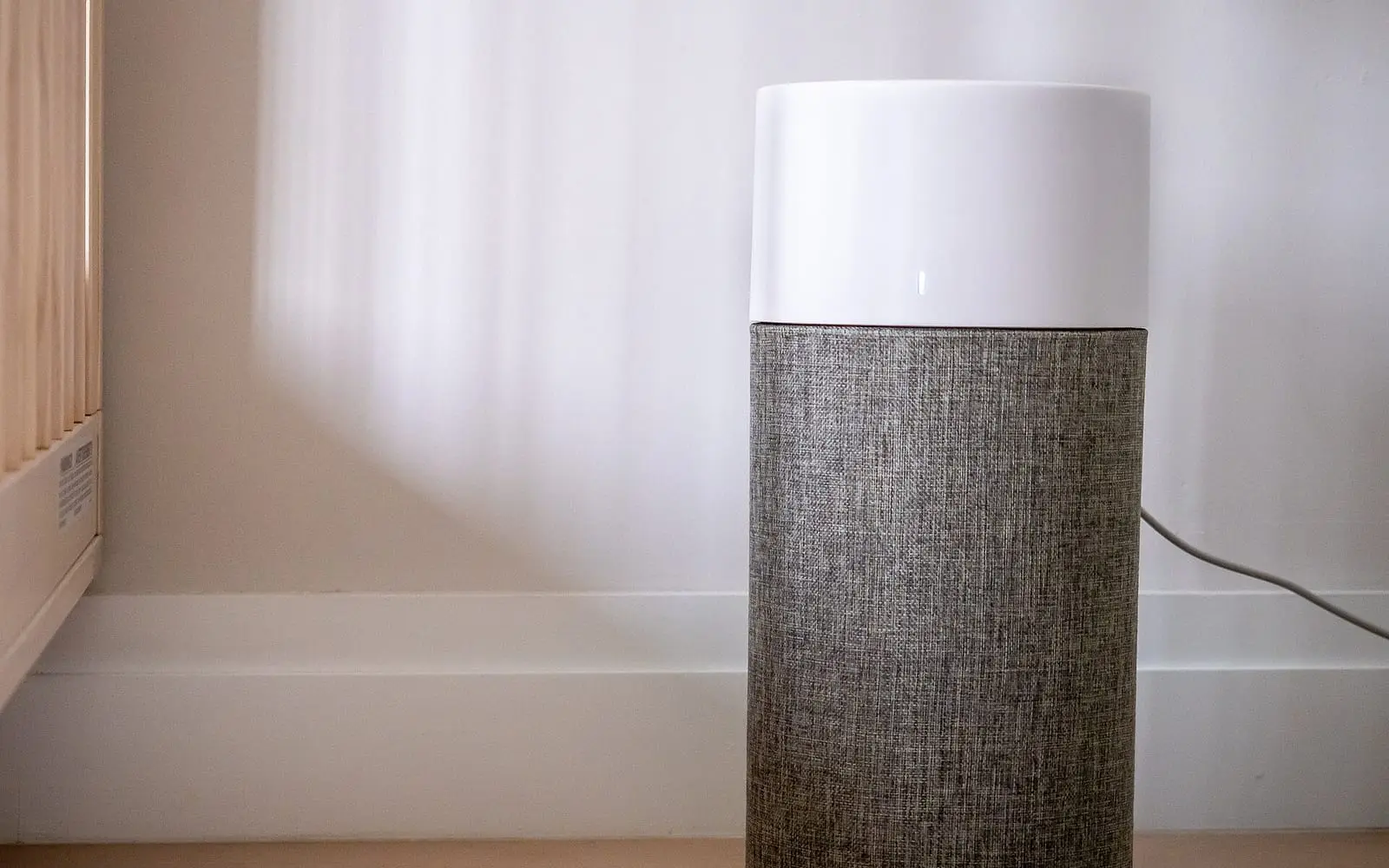
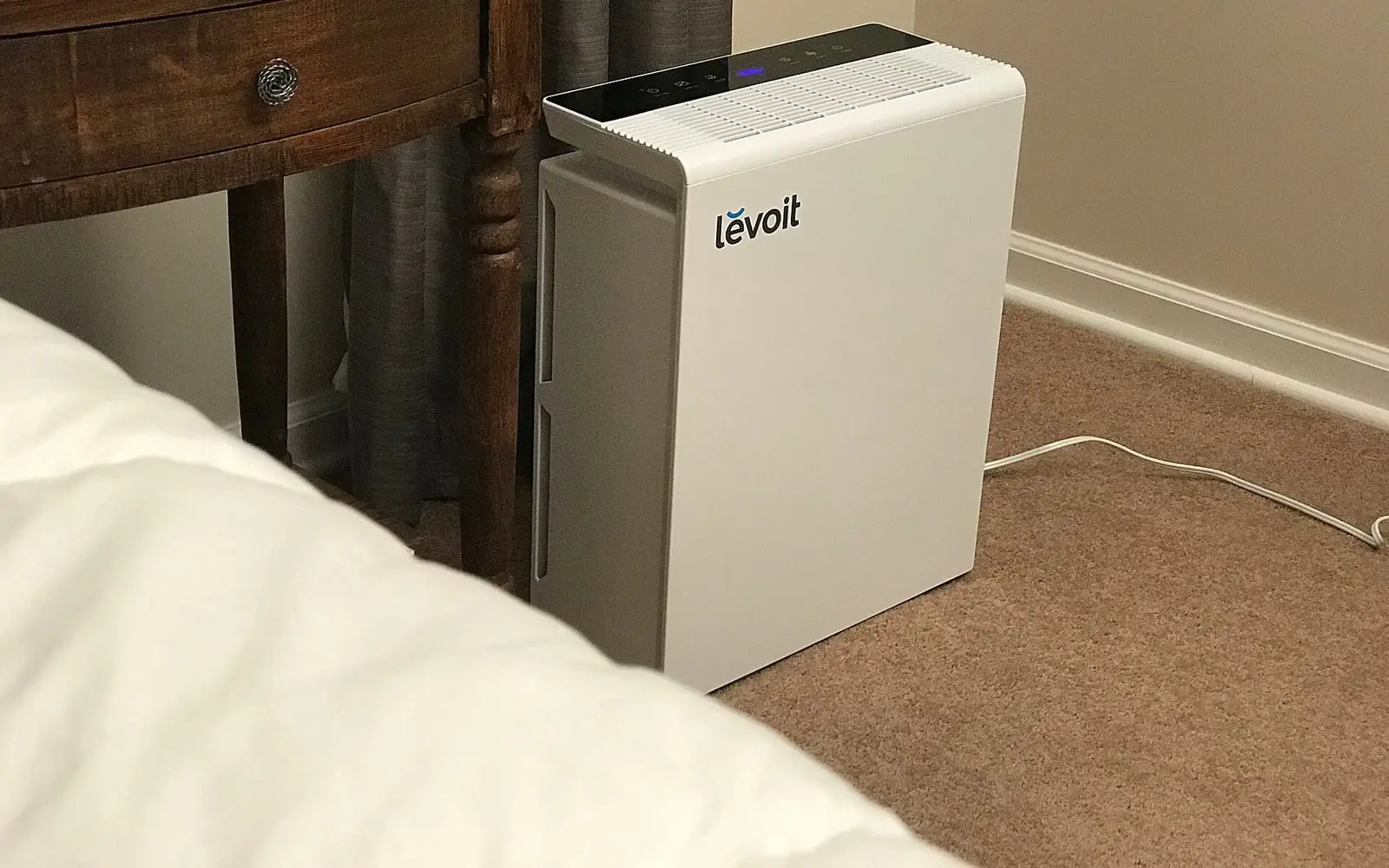
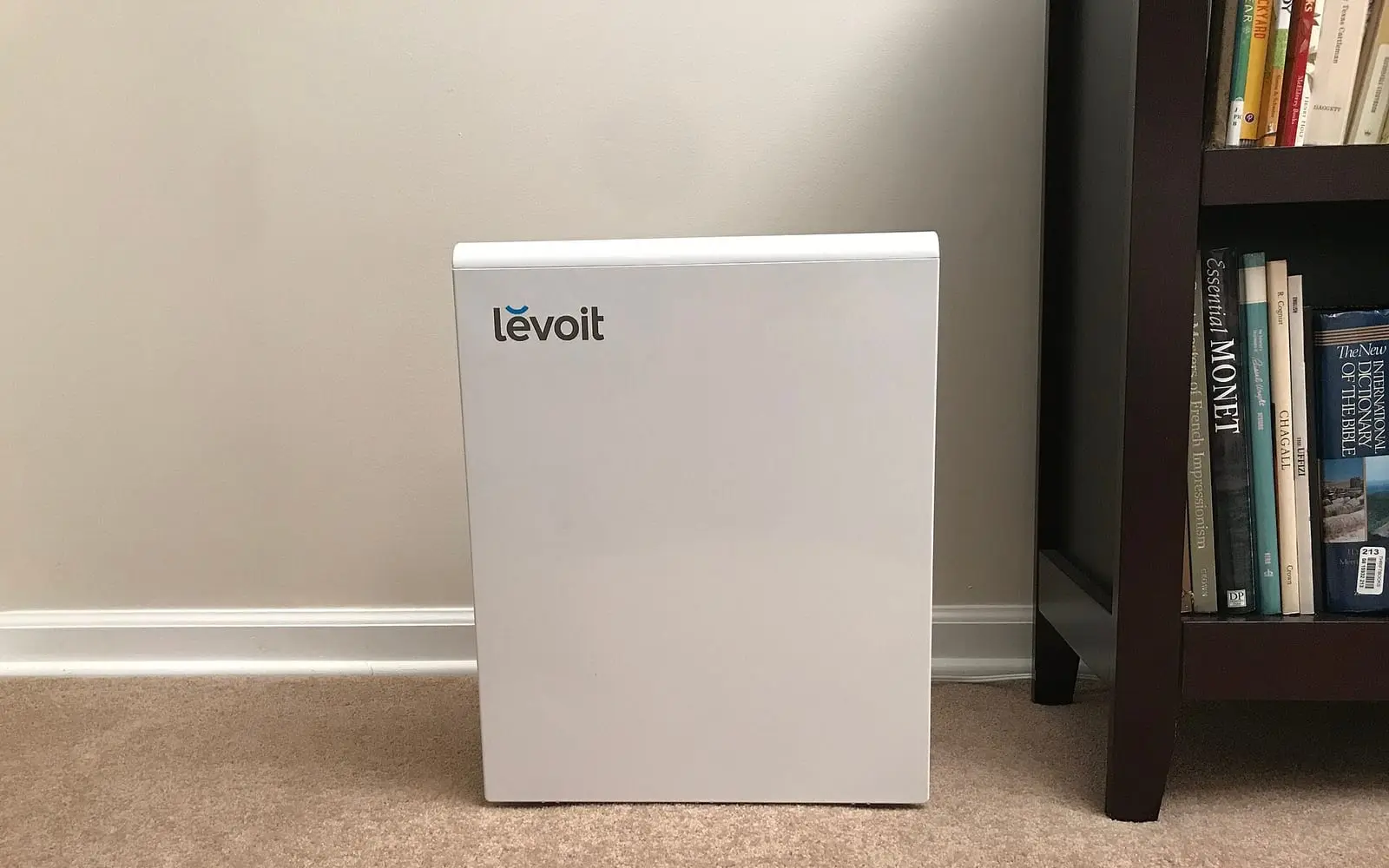
Levoit Core 400S: Cylindrical tower design, 8.5 x 8.5 x 20.5 inches, approximately 11 lbs. The white cylindrical shape is modern and unobtrusive — it looks like a small speaker or humidifier rather than an appliance. The top-mounted display shows PM2.5 readings and fan speed. Build quality is good for the price, though the plastic feels lighter than Winix.
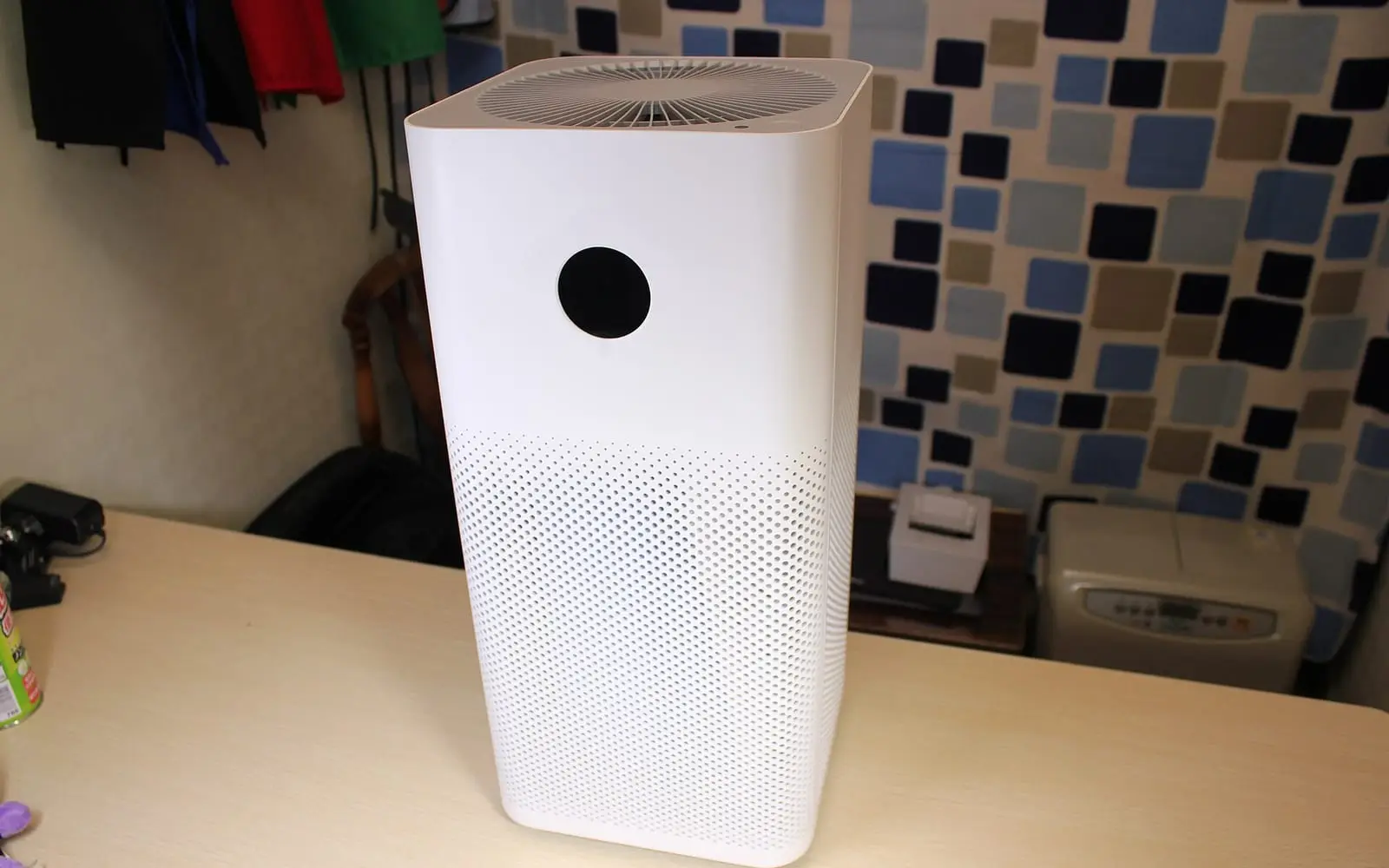
Winix 5500-2: Traditional rectangular tower, 8.2 x 15 x 23.6 inches, approximately 15.4 lbs. The darker, more industrial design is less visually appealing than the Levoit but feels more substantial. The top-mounted control panel includes touch buttons and the air quality LED. The larger footprint takes up more floor space.
Levoit wins on aesthetics and compactness. The cylindrical design fits more naturally into modern home decor and takes up less floor space. Winix feels more solidly built but looks more like a traditional appliance.
Secondary Comparison: Levoit Core 300S vs Winix AM90
For buyers looking at different price points or room sizes:
Levoit Core 300S ($100-$150)
The Core 300S is Levoit’s most popular model — a compact purifier covering up to 219 sq ft (5 ACH) with a CADR of 141 CFM. It includes WiFi, VeSync app support, Alexa/Google compatibility, and the same 3-stage filtration as the 400S in a smaller package. The laser PM2.5 sensor provides real-time air quality data. Noise drops to 22 dB on the lowest setting. At $100-$150, it’s one of the best values in the market for small-to-medium rooms.
Winix AM90 ($180-$230)
The AM90 is Winix’s answer to the smart purifier trend — it adds WiFi connectivity and Alexa support to the proven Winix filtration formula. Coverage reaches 360 sq ft (AHAM Verifide) with the same 4-stage filtration including PlasmaWave. The AM90 bridges the gap between Winix’s traditional strength (filtration) and Levoit’s advantage (smart features). At $180-$230, it’s pricier than the Levoit Core 300S but covers significantly more space.
The AM90 is the better choice if you want Winix filtration quality with smart features. The Core 300S is the better choice if you want maximum smart features at the lowest price and your room is under 220 sq ft.
Large Room Comparison: Levoit Core 600S vs Winix 5510
For larger spaces, both brands offer step-up models:
The Levoit Core 600S-P ($200-$280) is a powerhouse — 391 CFM CADR, covering up to 635 sq ft (5 ACH) or 2,933 sq ft (1 ACH). It includes the full VeSync smart suite, AirSight Plus PM2.5 sensor, and VortexAir 3.0 technology. Noise drops to 26 dB in sleep mode. This is Levoit’s flagship and it competes with purifiers costing twice as much.
The Winix 5510 ($160-$200) covers approximately 360 sq ft with True HEPA, PlasmaWave, and a washable pre-filter. It lacks WiFi but includes the standard Winix auto mode and air quality sensor. The 5510 is a solid performer but can’t match the Core 600S on coverage or smart features.
For large rooms, Levoit wins decisively. The Core 600S-P covers nearly twice the area of any Winix model in this price range, with better smart features and competitive noise levels.
PlasmaWave: Does It Actually Matter?
Winix’s PlasmaWave technology is the brand’s key differentiator, so it deserves a closer look. PlasmaWave creates hydroxyl radicals (OH) by splitting water vapor molecules in the air. These hydroxyls attach to pollutants and break them down at the molecular level — neutralizing bacteria, viruses, allergens, and chemical vapors that mechanical HEPA filtration alone can’t destroy.
The technology is CARB (California Air Resources Board) certified as ozone-free, meaning it produces less than 0.050 ppm of ozone — well below the FDA limit of 0.050 ppm. This is important because some ionization technologies (particularly older ones) produce harmful ozone as a byproduct.
Does it make a meaningful difference in practice? Independent testing suggests PlasmaWave provides a modest improvement in VOC and odor reduction beyond what the carbon filter alone achieves. It’s not a dramatic difference — the HEPA filter does the heavy lifting for particle removal — but it adds a layer of chemical pollutant neutralization that Levoit’s purely mechanical system doesn’t offer. For users concerned about VOCs, formaldehyde, or biological contaminants, PlasmaWave is a genuine advantage.
That said, Levoit’s approach of relying purely on mechanical filtration has its own appeal: no ionization technology means zero concern about any byproducts, however minimal. If you prefer the simplest, most straightforward approach to air cleaning, Levoit’s mechanical-only system is reassuring.
Who Should Buy Levoit
- You want app control, remote monitoring, and voice assistant integration
- Real-time PM2.5 data and air quality tracking matter to you
- You prefer a compact, modern design that blends into home decor
- You need large-room coverage (Core 600S covers 635+ sq ft)
- You want the quietest possible operation (22-24 dB on low settings)
- Budget is the primary concern — Levoit offers more features per dollar
- You prefer purely mechanical filtration without ionization technology
Who Should Buy Winix
- You want the additional pollutant neutralization of PlasmaWave technology
- Long-term filter costs matter — Winix’s washable carbon filter saves money over time
- You value a proven brand with 50+ years of air purification experience
- VOC and chemical pollutant removal is a priority
- You prefer a purifier that works well without needing an app or WiFi
- You want higher raw CADR (the 5500-2 moves more air per minute than the Core 400S)
- Independent testing credibility matters — Winix consistently ranks high in third-party reviews
Frequently Asked Questions
Q: Is Levoit or Winix better for allergies?
Both are effective for allergies — they use True HEPA filters that capture 99.97% of particles including pollen, dust mites, and pet dander. Winix has a slight edge due to PlasmaWave’s ability to neutralize allergens beyond what HEPA captures, but the practical difference for most allergy sufferers is minimal. Choose based on other factors like smart features (Levoit) or filter costs (Winix).
Q: Which brand has cheaper replacement filters?
Winix, by a meaningful margin. The washable AOC carbon filter eliminates one of the two recurring filter costs. Over 5 years, expect to spend approximately $200-$275 on Winix filters versus $275-$450 on Levoit filters, depending on the model. Winix’s washable pre-filter adds additional savings.
Q: Is PlasmaWave safe?
Yes. PlasmaWave is CARB-certified ozone-free, producing less than 0.050 ppm of ozone — well below safety thresholds. It’s fundamentally different from older ionizer technologies that produced harmful ozone levels. However, if you prefer zero ionization technology, you can disable PlasmaWave with a button on the unit, or choose Levoit’s purely mechanical filtration approach.
Q: Can I use third-party filters with Levoit or Winix?
Third-party HEPA filters are available for both brands at lower prices. However, both manufacturers recommend genuine filters for optimal performance and warranty coverage. Winix’s warranty specifically requires the use of Winix-branded filters. Third-party filters may fit but could compromise filtration efficiency or void warranty claims.
Q: Which is better for a bedroom?
Levoit Core 300S is the better bedroom choice for most people. It’s more compact, quieter (22 dB on low), has app control for adjusting settings without getting out of bed, and covers up to 219 sq ft — more than enough for most bedrooms. The Winix 5500-2 works well in bedrooms too, but it’s larger, slightly louder on low settings, and lacks the convenience of app control.
Q: Do either brand’s purifiers produce ozone?
Levoit purifiers produce no ozone — they use purely mechanical filtration. Winix purifiers with PlasmaWave produce trace amounts below 0.050 ppm (CARB certified), which is considered safe. Both brands are CARB-compliant for sale in California, which has the strictest ozone emission standards in the US.
The Verdict
For most buyers in 2026, Levoit offers the better overall package. The combination of smart features, competitive pricing, quiet operation, and a wide model range covering every room size makes Levoit the more versatile brand. The Core 300S is the best value in the sub-$150 category, and the Core 600S-P is the best large-room purifier under $300. If you want app control, voice commands, and real-time air quality data, Levoit is the clear choice.
Winix is the better choice for buyers who prioritize filtration depth over smart features. PlasmaWave adds a genuine extra layer of pollutant neutralization, the washable carbon filter reduces long-term costs, and the brand’s 50-year track record provides confidence in engineering quality. The 5500-2 remains one of the most recommended air purifiers by independent reviewers, and for good reason — it’s a proven, reliable workhorse that cleans air effectively without needing an internet connection.
The honest summary: Levoit is the smarter purifier, Winix is the deeper cleaner. Most people will be happier with Levoit’s features and value. Filtration purists and cost-conscious long-term thinkers will prefer Winix.
Specs and prices are checked against manufacturer documentation and current retail listings at the time of writing and can change. Read how we test and our editorial policy. Spotted an error? Tell us.