Molekule vs IQAir: Premium Air Purifier Showdown
Molekule's PECO pollutant destruction vs IQAir's Swiss-made HyperHEPA filtration. We compare technology, performance, coverage, costs, and real-world results to find the better premium purifier.
In this guide
Molekule and IQAir sit at the top of the air purifier market, but they represent fundamentally different philosophies about what “premium” means. IQAir is the Swiss-engineered precision instrument — HyperHEPA filtration that captures particles 10 times smaller than standard HEPA, airtight construction tested to medical-grade standards, and a 10-year warranty that signals confidence in longevity. Molekule is the Silicon Valley disruptor — PECO (Photoelectrochemical Oxidation) technology that claims to destroy pollutants at the molecular level rather than just trapping them, FDA clearance for pathogen destruction, and a design-forward aesthetic that looks more like a Sonos speaker than an air purifier.
Both brands charge premium prices — the IQAir HealthPro Plus runs $899-$1,199 and the Molekule Air Pro costs $800-$1,000. At these price points, you’re paying for technology that goes beyond what budget HEPA purifiers offer. But which technology actually delivers better results? This comparison examines the science, the real-world performance, the controversies, and the long-term costs to help you decide where your premium dollars are best spent.
Brand Overview
IQAir
Founded in 1963 in Switzerland, IQAir has over 60 years of experience in air quality solutions. The company manufactures its purifiers in Switzerland and southern Germany — a rarity in a market dominated by Chinese manufacturing. IQAir’s reputation is built on medical-grade filtration: their purifiers are used in hospitals, cleanrooms, and by organizations like the American Lung Association. The HealthPro Plus has been the brand’s flagship consumer product for over two decades, consistently earning top marks in independent testing.
IQAir’s core technology is HyperHEPA filtration, which captures 99.5% of particles down to 0.003 microns — that’s 100 times smaller than what standard HEPA filters (0.3 microns) are rated for. This means IQAir captures ultrafine particles, viruses, and nanoparticles that pass through conventional HEPA filters. The HealthPro Plus uses a 3-stage system: PreMax pre-filter for coarse particles, V5-Cell gas and odor filter with activated carbon and alumina, and the HyperHEPA final filter. The newer HealthPro Plus XE adds WiFi connectivity and smart features.
Molekule
Molekule launched in 2016, founded by Dr. Dharendra Yogi Goswami, a researcher who developed PECO technology at the University of South Florida. The company’s pitch is compelling: instead of trapping pollutants on a filter (where they can potentially multiply), PECO uses UV-A light to activate a catalyst-coated filter that breaks pollutants down into harmless components like water and carbon dioxide. The technology received FDA 510(k) clearance as a Class II medical device for destroying bacteria, viruses, and mold.
However, Molekule’s journey hasn’t been without controversy. In 2019, the Better Business Bureau’s National Advertising Division recommended that Molekule discontinue 26 advertising claims, including superiority claims over HEPA filters, following a complaint from Dyson. Consumer Reports ranked early Molekule models among the lowest performers in particle removal testing. The company has since improved its products — the current Air Pro combines PECO with a HEPA pre-filter — but the early reputation issues linger. The Air Pro covers up to 1,000 sq ft and includes particle and chemical sensors with auto-protect modes.
Head-to-Head: IQAir HealthPro Plus vs Molekule Air Pro
Filtration Technology
IQAir HealthPro Plus uses a purely mechanical, multi-stage approach:
- Stage 1 — PreMax Pre-Filter: Captures coarse particles (pollen, pet hair, dust) to extend the life of downstream filters. Rated for particles 10+ microns.
- Stage 2 — V5-Cell Gas and Odor Filter: 2.5 kg of activated carbon and alumina pellets absorb formaldehyde, VOCs, and household odors. This is a substantially larger carbon bed than what most consumer purifiers offer.
- Stage 3 — HyperHEPA Filter: Captures 99.5% of particles down to 0.003 microns. This goes far beyond standard HEPA (99.97% at 0.3 microns), capturing ultrafine particles, viruses, bacteria, and combustion byproducts that standard HEPA misses.
The entire unit is sealed to prevent air bypass — every molecule of air passes through all three filtration stages. IQAir individually tests and certifies each unit before shipping, providing a hand-signed performance certificate with your specific unit’s test results.
Molekule Air Pro uses a dual-technology approach:
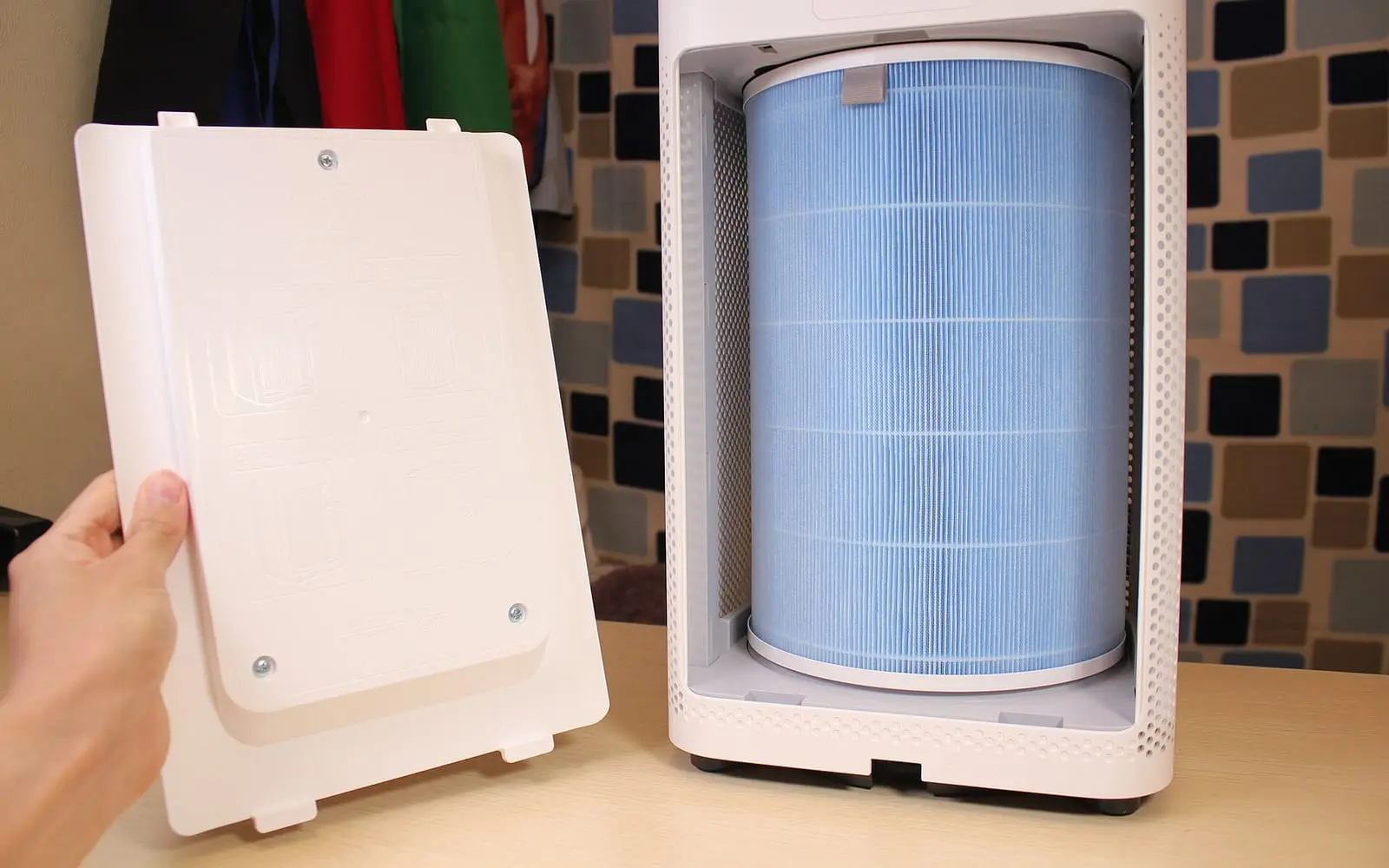
- PECO-HEPA Tri-Power Filter: Combines a HEPA pre-filter layer with the PECO nanocatalyst layer. The HEPA component captures particles mechanically, while the PECO layer uses UV-A light to activate a photocatalytic reaction that oxidizes and destroys organic pollutants (bacteria, viruses, mold, VOCs, allergens) at the molecular level.
- Auto Protect Modes: Particle Auto Protect adjusts fan speed based on PM2.5 readings. Chemical Auto Protect responds to detected VOC levels.
The fundamental difference: IQAir traps pollutants with extraordinary efficiency (down to 0.003 microns), while Molekule claims to destroy them through photocatalytic oxidation. IQAir’s approach is proven, measurable, and independently verified. Molekule’s PECO technology is scientifically plausible but has faced scrutiny regarding real-world effectiveness — particularly for particle removal, where early models performed poorly in independent testing.
Performance and Coverage
IQAir HealthPro Plus: Covers up to 1,125 sq ft. The unit delivers 300 CFM of purified air and can clean a 500 sq ft room in approximately 15 minutes. Independent testing from Modern Castle showed 97.4% removal of airborne particulates. The HyperHEPA filter’s ability to capture ultrafine particles (0.003 microns) means it handles viruses, combustion particles, and nanoparticles that standard HEPA purifiers miss entirely.
Molekule Air Pro: Covers up to 1,000 sq ft. CADR ratings of approximately 234 CFM (smoke), 242 CFM (dust), and 260 CFM (pollen). The Air Pro performs significantly better than earlier Molekule models — the addition of the HEPA pre-filter layer addressed the particle removal weakness that plagued the original PECO-only design. For VOC and chemical pollutant destruction, PECO technology provides a capability that mechanical filtration alone cannot match.
IQAir has the edge in particle removal — HyperHEPA’s 0.003-micron capture rate is unmatched in the consumer market. Molekule has a theoretical edge in pollutant destruction — PECO breaks down organic compounds rather than just trapping them. For most home environments where particle removal is the primary concern, IQAir delivers more measurable, verifiable results.
Gas and Chemical Filtration
This is where the comparison gets nuanced. IQAir’s V5-Cell contains 2.5 kg of activated carbon and alumina — a massive carbon bed that absorbs VOCs, formaldehyde, and odors through adsorption. It’s effective but has a finite capacity: once the carbon is saturated, it needs replacement. The V5-Cell typically lasts 18-24 months depending on pollution levels.
Molekule’s PECO technology theoretically destroys VOCs and chemical pollutants through oxidation rather than adsorption. This means the filter doesn’t “fill up” with chemicals the way carbon does — it breaks them down continuously. Real-world testing from users and some reviewers suggests PECO does provide noticeable odor and VOC reduction, particularly for off-gassing from new furniture, paint, and building materials. However, the rate of destruction may not keep pace with high-concentration chemical exposure.
For chemical sensitivity or environments with significant VOC sources, Molekule’s destruction approach has theoretical advantages over IQAir’s adsorption approach. For general air quality improvement, IQAir’s massive carbon bed provides reliable, proven chemical filtration.
Build Quality and Design
IQAir HealthPro Plus: Swiss-made, built like a precision instrument. The unit is substantial — 16 x 15 x 28 inches, 35 lbs. It’s not winning any design awards; it looks like medical equipment because it essentially is medical equipment. The build quality is exceptional, with tight tolerances and airtight seals. The 10-year warranty reflects IQAir’s confidence in durability. Controls are basic — a remote control and simple LED display. The newer XE model adds WiFi and app control.
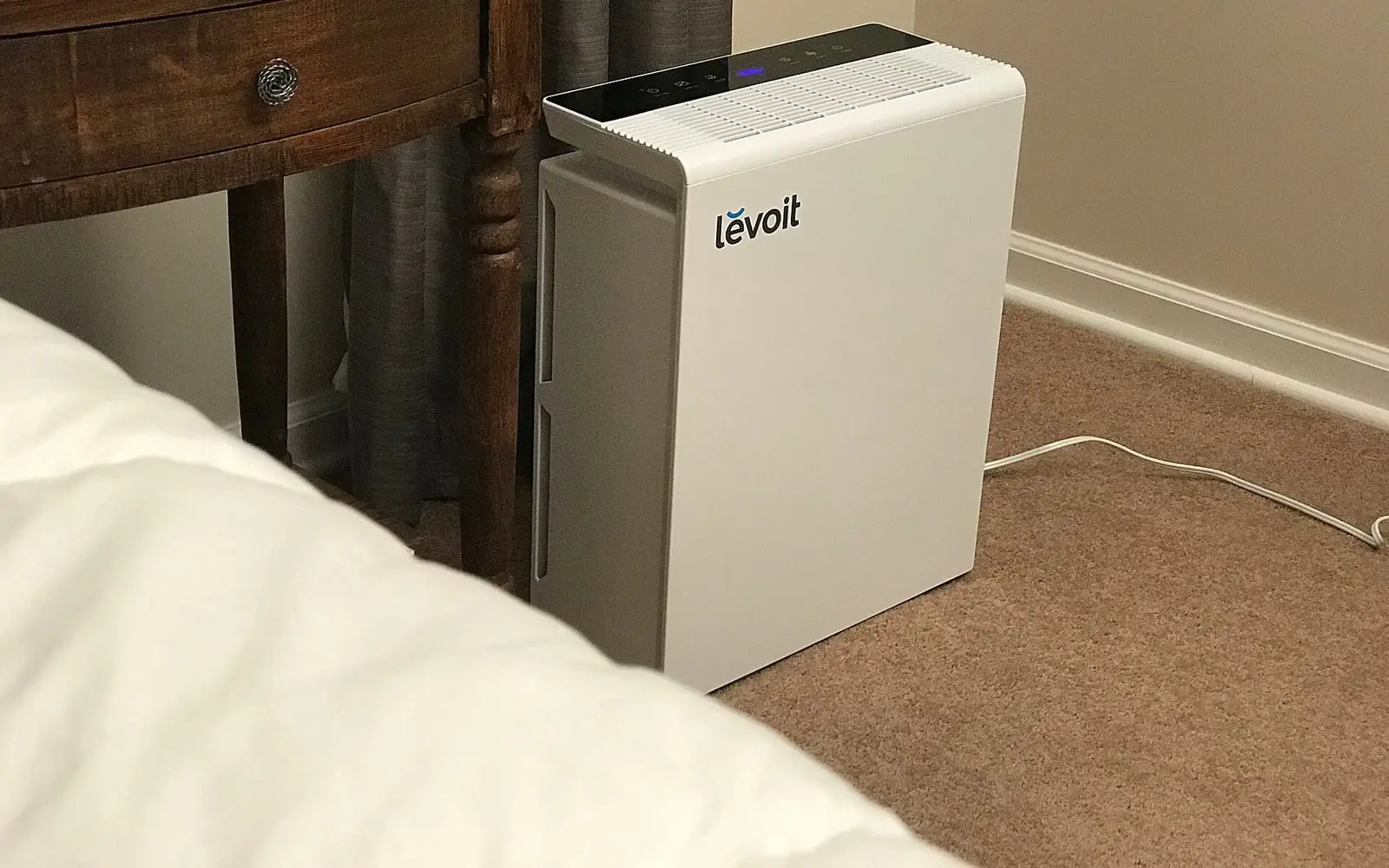
Molekule Air Pro: Designed in San Francisco with aesthetics as a priority. The cylindrical aluminum body (11 x 11 x 23 inches, approximately 18 lbs) looks like a premium home accessory. The leather handle adds a design touch. The touchscreen display and companion app provide a modern user experience. Build quality is good but not in the same league as IQAir’s Swiss engineering. The 1-year warranty is notably shorter than IQAir’s 10-year coverage.
IQAir is built for performance and longevity. Molekule is built for performance and aesthetics. If your purifier lives in a visible location and design matters, Molekule is more attractive. If you want a unit that will run reliably for a decade, IQAir’s engineering and warranty provide more confidence.
Smart Features
Molekule Air Pro: Includes particle and chemical sensors, two Auto Protect modes (particle and chemical), a companion app with real-time and historical air quality data, and a touchscreen interface. The app provides detailed insights into your indoor air quality trends. This is a modern, connected device.
IQAir HealthPro Plus (standard): No WiFi, no app, no smart features. Basic remote control and LED display. The unit relies on timer settings and manual fan speed control. The newer HealthPro Plus XE ($1,199) adds WiFi connectivity and the IQAir app with air quality monitoring, but at a significant price premium.
For smart features, Molekule wins against the standard HealthPro Plus. The XE model closes the gap but costs $300+ more than the base model.
Noise Levels
IQAir HealthPro Plus: Approximately 25 dB on the lowest setting (speed 1), up to approximately 59 dB on maximum (speed 6). The low setting is very quiet, suitable for bedroom use. The unit has 6 fan speeds, providing granular control over the noise-performance tradeoff.
Molekule Air Pro: Approximately 30-64 dB depending on fan speed. The Auto Protect modes can ramp up fan speed unexpectedly when pollutants are detected, which some users find disruptive. On lower manual settings, the unit is reasonably quiet but not as silent as IQAir’s lowest speed.
IQAir is quieter on the lowest settings and provides more fan speed options for fine-tuning noise levels.
Long-Term Costs
This is where IQAir’s premium price starts to look more reasonable:
IQAir HealthPro Plus:
- Purchase price: $899-$1,199
- PreMax pre-filter: $70-$80 (replace every 18 months)
- V5-Cell gas filter: $100-$120 (replace every 18-24 months)
- HyperHEPA filter: $170-$200 (replace every 3-4 years)
- Annual filter cost: Approximately $120-$160
- 5-year total cost: $1,500-$2,000
- Warranty: 10 years
Molekule Air Pro:
- Purchase price: $800-$1,000
- PECO-HEPA filter: $100-$130 (replace every 6 months)
- Annual filter cost: Approximately $200-$260
- 5-year total cost: $1,800-$2,300
- Warranty: 1 year
Despite IQAir’s higher purchase price, the long-term cost is actually lower due to longer filter life and dramatically better warranty coverage. Molekule’s 6-month filter replacement cycle drives annual costs significantly higher. Over 5 years, IQAir costs less to own while providing a 10-year warranty versus Molekule’s 1-year coverage.
The Controversy Factor
Any honest comparison of these brands needs to address Molekule’s controversial history. In 2019, the Better Business Bureau recommended Molekule discontinue 26 advertising claims after a complaint from Dyson. Consumer Reports ranked early Molekule models among the worst performers in particle removal testing. Wirecutter found the original Molekule Air to be ineffective in independent testing.
Molekule has responded by improving its products — the current Air Pro includes a HEPA pre-filter that addresses the particle removal weakness, and the PECO technology has received FDA 510(k) clearance for pathogen destruction. The company’s current products are meaningfully better than the early models that drew criticism.
IQAir has no comparable controversy. The brand’s claims are backed by decades of independent testing, medical-facility deployments, and individually certified performance data. When IQAir says their filter captures 99.5% of particles at 0.003 microns, that claim is verified by third-party testing and documented for each individual unit.
This doesn’t mean Molekule’s current products are bad — the Air Pro is a capable purifier. But buyers should be aware that IQAir’s performance claims have a stronger foundation of independent verification.
Who Should Buy IQAir
- You have severe allergies, asthma, or a compromised immune system and need the most thorough particle filtration available
- Ultrafine particle removal (viruses, combustion particles, nanoparticles) is a priority
- You want Swiss-made build quality and a 10-year warranty
- Long-term cost of ownership matters more than upfront price
- You trust proven, independently verified technology over newer approaches
- Your purifier will run continuously for years — IQAir is built for marathon duty
- You need coverage for large rooms (up to 1,125 sq ft)
Who Should Buy Molekule
- VOC destruction and chemical pollutant removal are your primary concerns
- You want FDA-cleared pathogen destruction (bacteria, viruses, mold)
- Design and aesthetics matter — the Air Pro looks significantly better than the IQAir
- You want smart features, app control, and real-time air quality data without paying for the XE model
- You’re dealing with specific chemical sensitivities (off-gassing, formaldehyde, paint fumes)
- You prefer the concept of destroying pollutants rather than trapping them
Frequently Asked Questions
Q: Is IQAir worth the high price?
For people with serious respiratory conditions, severe allergies, or compromised immune systems — yes. The HyperHEPA filter captures particles that no other consumer purifier can touch (0.003 microns), the build quality is exceptional, and the 10-year warranty means you’re investing in a decade of clean air. For general air quality improvement in a healthy household, more affordable options like Coway or Blueair deliver excellent results at a fraction of the cost.
Q: Does Molekule PECO technology actually work?
The science behind PECO is legitimate — photocatalytic oxidation is a real chemical process that can break down organic pollutants. The FDA 510(k) clearance for pathogen destruction provides regulatory validation. However, early Molekule products performed poorly in independent particle removal testing, and the company faced advertising claim challenges. The current Air Pro, with its added HEPA pre-filter, performs significantly better than earlier models. PECO appears most effective for VOC and odor destruction rather than particle removal.
Q: Which has better filter longevity?
IQAir, by a wide margin. The HyperHEPA filter lasts 3-4 years, the V5-Cell lasts 18-24 months, and the PreMax lasts 18 months. Molekule’s PECO-HEPA filter needs replacement every 6 months. Over 5 years, you’ll replace Molekule filters approximately 10 times versus 3-4 complete IQAir filter changes.
Q: Can either purifier help with COVID and other viruses?
Both can help reduce airborne virus particles, but through different mechanisms. IQAir’s HyperHEPA captures virus-sized particles (0.003 microns) with 99.5% efficiency — physically removing them from the air. Molekule’s PECO technology destroys viruses through oxidation. IQAir’s approach is more thoroughly verified for virus-sized particle capture. Neither purifier should be considered a substitute for vaccination, ventilation, or other public health measures.
Q: Which is quieter for bedroom use?
IQAir on its lowest speed setting (approximately 25 dB) is quieter than Molekule’s lowest setting (approximately 30 dB). IQAir also offers 6 fan speeds for more precise noise control. However, both are quiet enough for bedroom use on their lower settings. Molekule’s Auto Protect mode can cause unexpected fan speed increases during the night if it detects pollutant spikes.
The Verdict
For most premium air purifier buyers, IQAir is the better investment. The HealthPro Plus delivers the most thorough particle filtration available in a consumer product, backed by 60 years of engineering expertise, Swiss manufacturing, individually certified performance, and a 10-year warranty. Despite the higher upfront cost, it’s actually cheaper to own over 5 years than the Molekule Air Pro. The lack of smart features on the base model is a legitimate drawback, but the XE model addresses this for buyers willing to pay more.
Molekule is the better choice for a specific use case: environments where chemical pollutant destruction is the primary concern. If you’re dealing with significant VOC sources, chemical sensitivities, or want FDA-cleared pathogen destruction in a design-forward package, the Air Pro offers capabilities that IQAir’s mechanical filtration doesn’t match. Just go in with realistic expectations — PECO is a supplement to HEPA filtration, not a replacement for it.
The bottom line: IQAir for the most proven, thorough air cleaning available. Molekule for chemical pollutant destruction in a beautiful package.
Specs and prices are checked against manufacturer documentation and current retail listings at the time of writing and can change. Read how we test and our editorial policy. Spotted an error? Tell us.