Best Air Purifiers for Dust in 2026
Dust never stops settling. These 7 air purifiers are proven to capture dust, dust mites, and fine particulates with verified CADR ratings and True HEPA filtration.
In this guide
Dust is the most persistent indoor air quality problem, and it’s not just an aesthetic nuisance. Household dust is a cocktail of dead skin cells, dust mite feces, pollen, pet dander, textile fibers, soil particles, and microscopic debris that triggers allergic reactions in roughly 20 million Americans. Dust mites — microscopic arachnids that feed on dead skin — produce allergen-laden fecal pellets that become airborne when disturbed. These particles range from 1 to 40 microns, with the most allergenic fragments sitting in the 1-10 micron range that penetrates deep into your respiratory system.
An air purifier won’t eliminate dust from your home — gravity and surfaces will always win that battle. What a good HEPA purifier does is dramatically reduce airborne dust particles, cutting the concentration of respirable dust that you actually inhale. The key metric is CADR for dust specifically, because dust particles behave differently than smoke or pollen in airflow. Larger dust particles settle faster, so you need strong airflow (high CADR) to capture them before they land on surfaces. A purifier with a high dust CADR running continuously will noticeably reduce the dust that accumulates on furniture, electronics, and floors.
These seven purifiers were selected specifically for dust performance — prioritizing dust CADR ratings, pre-filter effectiveness for large particles, and the ability to run continuously without excessive noise or energy consumption.
Why Dust Is Harder to Filter Than You Think
Not all dust particles are created equal, and understanding the size distribution matters for choosing the right purifier:
- Large dust (10-100+ microns): Visible dust bunnies, lint, hair, and large skin flakes. These settle quickly and are captured by pre-filters. They’re more of a cleaning problem than an air quality problem.
- Medium dust (2.5-10 microns): Dust mite debris, mold spores, pollen fragments, and fine textile fibers. These stay airborne for minutes to hours and are the primary trigger for dust allergies. HEPA filters capture these easily.
- Fine dust (0.3-2.5 microns): PM2.5 particles from combustion, cooking, and outdoor pollution that attach to dust. These stay airborne for hours and penetrate deep into lungs. True HEPA captures 99.97% at 0.3 microns.
- Ultrafine dust (<0.3 microns): Nanoparticles from combustion and chemical reactions. Standard HEPA still captures most of these through diffusion, but H13 and medical-grade filters are more effective.
The practical implication: you need a purifier with both a good pre-filter (for large dust that clogs HEPA filters prematurely) and a high-quality HEPA filter (for the respirable particles that affect your health). A washable pre-filter is especially valuable for dusty homes because it extends HEPA filter life significantly.
The 7 Best Air Purifiers for Dust
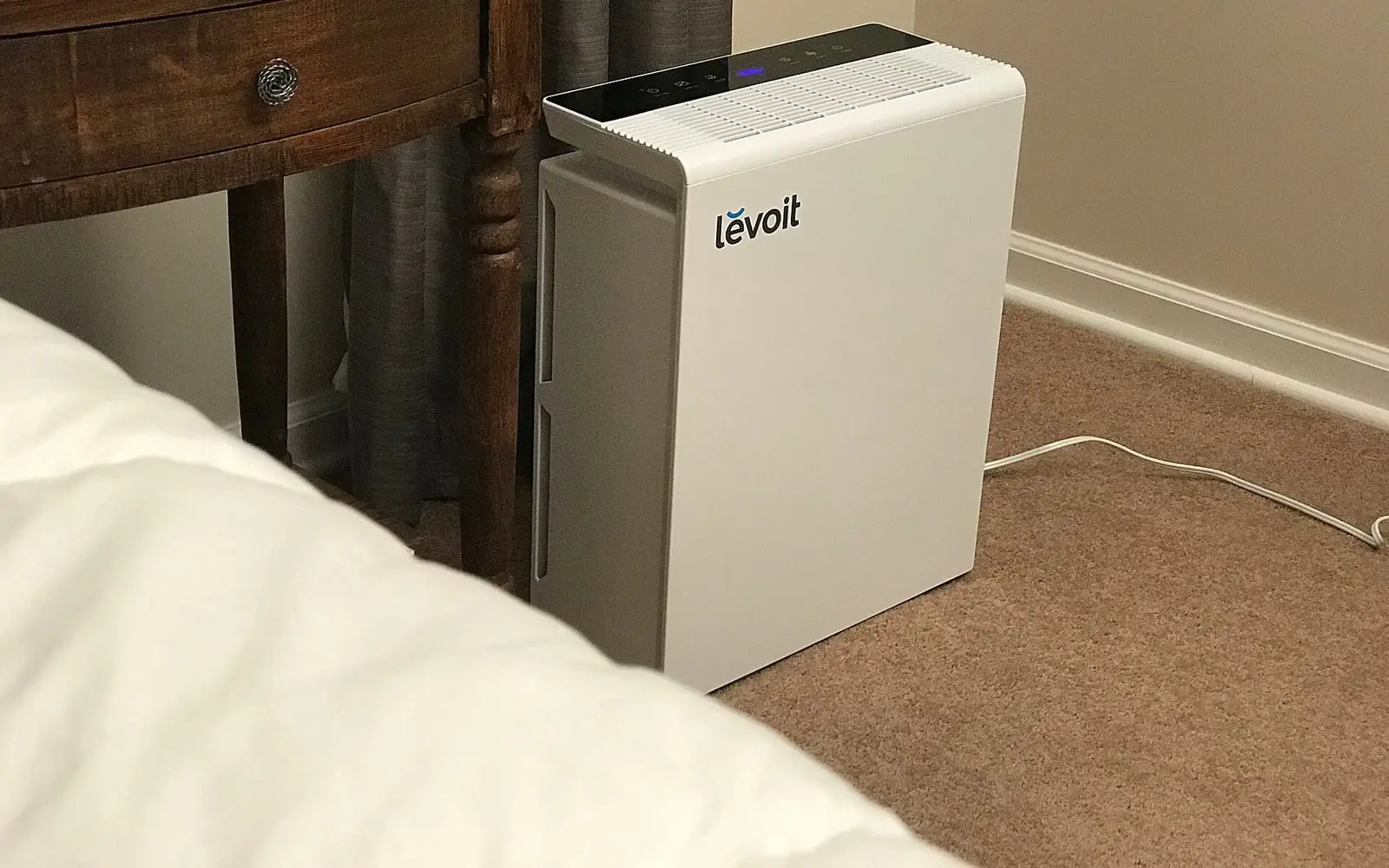
1. Levoit Core 600S — Best Overall for Dust
The Levoit Core 600S is the most powerful smart air purifier Levoit makes, and its dust performance is exceptional. With a CADR of 391 CFM and VortexAir 3.0 technology, it processes air in a 635 sq ft room 5 times per hour — that’s enough airflow to capture dust particles before they settle on surfaces. For dusty homes, high air changes per hour is the single most important factor, and the 600S delivers more than any other purifier in its price range.
The three-stage filtration starts with a pre-filter that captures large dust, hair, and lint before they reach the H13 True HEPA filter (99.97% at 0.3 microns). The activated carbon layer handles odors and VOCs. The AirSight Plus laser dust sensor provides real-time PM2.5 readings on the display and in the VeSync app, so you can actually see dust levels drop after vacuuming or when someone walks across a carpet. Auto mode responds to dust events within seconds, ramping up fan speed when particles spike.
At 12.3 x 12.3 x 23.6 inches and 13.7 lbs, the cylindrical design with 360-degree intake pulls dusty air from all directions. Sleep mode drops to 26 dB — quiet enough for bedrooms. WiFi connectivity enables scheduling, remote control via Alexa and Google Assistant, and historical air quality tracking. Energy Star certified, it draws as little as 12W on low speed.
Replacement filters cost $45-$65 and last 6-12 months depending on dust levels. In very dusty environments, expect closer to 6 months. Annual filter cost of $55-$90 is reasonable for the performance level. The 2-year warranty is standard for Levoit.
What we like
- 391 CFM CADR — highest on this list, captures dust before it settles
- 635 sq ft coverage at 5 ACH — handles large, dusty rooms
- Laser dust sensor with real-time PM2.5 display — see dust levels in real time
- VortexAir 3.0 for efficient 360-degree air circulation
- Full smart features — VeSync app, Alexa, Google Assistant
- Energy Star certified — efficient for continuous operation
- Auto mode responds instantly to dust events
Trade-offs
- Larger footprint than compact purifiers (12.3 x 12.3 x 23.6 inches)
- Pre-filter is not separately washable — integrated into main filter
- Filter cost increases in very dusty environments (6-month replacement)
- 26 dB sleep mode is slightly louder than some competitors
- No dedicated dust-specific filter option
- At $230-300, it's a significant investment
2. Coway Airmega 200M — Best Mid-Range for Dust
The Coway Airmega 200M has been a dust-fighting workhorse for years. Its four-stage filtration — washable pre-filter, deodorization carbon filter, True HEPA, and optional ionizer — is specifically designed for continuous operation in particle-heavy environments. The washable pre-filter is a major advantage for dusty homes: it captures large dust particles and pet hair before they reach the HEPA filter, and you can rinse it clean every 2-4 weeks to maintain airflow. This alone can double HEPA filter life in dusty conditions.
CADR ratings of 246 CFM for dust, 240 CFM for pollen, and 233 CFM for smoke cover rooms up to 360 sq ft. The dust CADR of 246 is the highest among the three particle types, which tells you the 200M is particularly effective at moving and capturing dust-sized particles. The real-time air quality sensor detects particle changes and adjusts fan speed in auto mode. Eco mode shuts the fan off when dust levels stay low, then restarts when activity stirs particles up.
At $200-$250, the 200M offers the best dust-fighting value for medium rooms. The compact design (16.8 x 18.3 x 9.6 inches) fits on a table or floor. Sleep mode at approximately 24 dB is bedroom-friendly. The 3-year warranty and Coway’s decade-long reliability record provide confidence for a device you’ll run 24/7.
The lack of WiFi is the main limitation. For smart features, you’d need to look at the Levoit models. But for pure dust removal performance with the lowest maintenance burden (thanks to the washable pre-filter), the 200M is hard to beat.
What we like
- Washable pre-filter — critical for dusty homes, extends HEPA life
- 246 CFM dust CADR — strong mid-range dust performance
- Eco mode saves energy during low-dust periods
- Real air quality sensor with auto mode
- 3-year warranty — proven long-term reliability
- Compact design fits anywhere
- Four-stage filtration for comprehensive particle capture
Trade-offs
- No WiFi or app control
- 360 sq ft coverage limits it to medium rooms
- Ionizer cannot be permanently disabled
- No PM2.5 numerical display — color LED only
- Carbon filter needs separate 6-month replacement
- Design is functional but dated
3. Winix 5510 — Best for Dust and Odors Combined
The Winix 5510 is the successor to the beloved 5500-2, and it improves on its predecessor in every way that matters for dust control. With an AHAM-verified CADR of 253 CFM and coverage for rooms up to 392 sq ft, it handles dust in medium-to-large rooms effectively. But what sets the 5510 apart is the combination of dust filtration with Winix’s best-in-class odor control — the washable AOC (Advanced Odor Control) carbon filter uses activated carbon granules rather than a thin sheet, providing meaningful VOC and odor reduction alongside particle capture.
The four-stage filtration system works in sequence: a washable fine mesh pre-filter traps large dust and hair, the True HEPA filter captures 99.97% of particles at 0.3 microns, the AOC carbon filter absorbs odors and gases, and PlasmaWave technology breaks down remaining chemical compounds. For dusty homes that also deal with cooking odors, pet smells, or chemical off-gassing, this combination is unmatched under $250.
Smart features include WiFi with the Winix Smart app, auto mode with a particle sensor, and five fan speeds for granular control. The app provides remote monitoring and scheduling. At $180-$200, the 5510 undercuts the Coway 200M while adding WiFi and better odor control. The washable pre-filter and washable AOC carbon filter both reduce ongoing costs — you’re only replacing the HEPA filter ($40-$55) every 12 months.
Sleep mode at approximately 25 dB is competitive. The tower design (23.6 x 15 x 8.2 inches) has a moderate footprint. The 2-year warranty is standard.
What we like
- AHAM-verified 253 CFM CADR — strong dust performance for the price
- Washable pre-filter AND washable AOC carbon — lowest ongoing costs
- WiFi + app control at $180-200 — best value smart purifier for dust
- Four-stage filtration with PlasmaWave for comprehensive cleaning
- Five fan speeds for precise control
- 392 sq ft coverage — handles medium-large rooms
- Best combined dust + odor performance under $250
Trade-offs
- PlasmaWave effectiveness debated among professionals
- Sleep mode at 25 dB is slightly louder than Coway and Levoit
- No Google Assistant — Alexa only
- Winix Smart app less polished than VeSync
- Tower design takes more floor space
- No PM2.5 numerical display
4. Honeywell HPA300 — Best Raw Power for Dust
The Honeywell HPA300 is the brute-force approach to dust removal. With CADR ratings of approximately 300 CFM for smoke and coverage for rooms up to 465 sq ft, it moves more air than any other purifier under $250. The design philosophy is simple: maximum airflow through True HEPA filtration, no frills. For severely dusty environments — homes near construction, unpaved roads, or in arid climates — the HPA300’s raw air-moving power is its greatest asset.
The filtration system uses a carbon pre-filter for large particles and odors, plus a True HEPA filter that captures 99.97% of particles at 0.3 microns. Three cleaning levels plus a Turbo Clean setting provide four speed options. The Turbo mode is noticeably loud but moves an enormous volume of air — useful for quick dust reduction after activities that stir up particles (vacuuming, sweeping, construction nearby).
At $180-$230, the HPA300 is competitively priced for its coverage area. The timer function (2, 4, or 8 hours) allows scheduled operation. A filter change indicator tracks usage. The design is utilitarian — a black rectangular box that prioritizes function over form. At 20.1 x 22.8 x 10.8 inches, it’s one of the larger units on this list.
The trade-offs are significant: no WiFi, no app, no air quality sensor, no auto mode. You set it and manually adjust as needed. Filter costs are moderate — HEPA filters run $35-$50 with a 12-month cycle, and carbon pre-filters cost $15-$20 with a 3-month cycle. Annual filter cost of $75-$100 reflects the dual-filter replacement schedule. The 5-year warranty is the longest on this list.
What we like
- Highest raw airflow — moves more air than any competitor under $250
- 465 sq ft coverage — handles large rooms effectively
- Turbo Clean mode for rapid dust reduction
- True HEPA captures 99.97% at 0.3 microns
- 5-year warranty — longest on this list
- Simple, reliable operation — no smart features to malfunction
- Proven brand with wide filter availability
Trade-offs
- No WiFi, no app, no air quality sensor, no auto mode
- Turbo mode is loud — not suitable for bedrooms during use
- Carbon pre-filter needs replacement every 3 months
- Utilitarian design — not aesthetically pleasing
- No sleep mode — lowest setting is still audible
- Large footprint (20.1 x 22.8 x 10.8 inches)
- Higher annual filter cost due to frequent pre-filter changes
5. Levoit Core 400S — Best Smart Purifier for Dust
The Levoit Core 400S occupies the middle ground between the compact Core 300 and the large Core 600S, and for many dusty bedrooms and home offices, it’s the ideal size. With approximately 260 CFM CADR and 403 sq ft coverage at 5 air changes per hour, it handles dust in medium-large rooms without the bulk of the 600S. The laser dust sensor provides numerical PM2.5 readings — you can watch dust levels drop in real time on the display or in the VeSync app.
The three-stage filtration (pre-filter, H13 True HEPA, activated carbon) captures 99.97% of particles at 0.3 microns. The 360-degree cylindrical intake pulls air from all directions, which is particularly effective for dust because it doesn’t create dead zones where particles settle undisturbed. Auto mode uses the laser sensor to adjust fan speed based on actual particle counts — when someone walks across a carpet and kicks up dust, the 400S responds within seconds.
Smart features are comprehensive: VeSync app with scheduling, historical air quality data, and filter life monitoring. Alexa and Google Assistant voice control. Sleep mode at 24 dB with display off is among the quietest on this list. The compact cylindrical design (8.7 x 8.7 x 20.5 inches) fits on a nightstand or in a corner.
At $180-$220, the 400S is priced between the Vital 200S and Core 600S. Replacement filters cost $35-$50 with a 6-12 month cycle. For dusty bedrooms and medium rooms where you want smart dust monitoring without the size and cost of the 600S, the 400S is the sweet spot.
What we like
- Laser dust sensor with PM2.5 numerical display — precise dust monitoring
- 260 CFM CADR with 403 sq ft coverage — right-sized for bedrooms
- 360-degree intake eliminates dead zones for dust capture
- Full smart features — VeSync, Alexa, Google Assistant
- 24 dB sleep mode — quietest on this list
- Compact cylindrical design fits anywhere
- Auto mode responds to dust events in real time
Trade-offs
- Thin carbon layer — limited odor control
- Pre-filter not separately washable
- 260 CFM is moderate — not enough for very large or very dusty rooms
- VeSync app can have connectivity issues
- 2-year warranty (shorter than Honeywell and Coway)
- Filter life shorter in dusty environments (closer to 6 months)
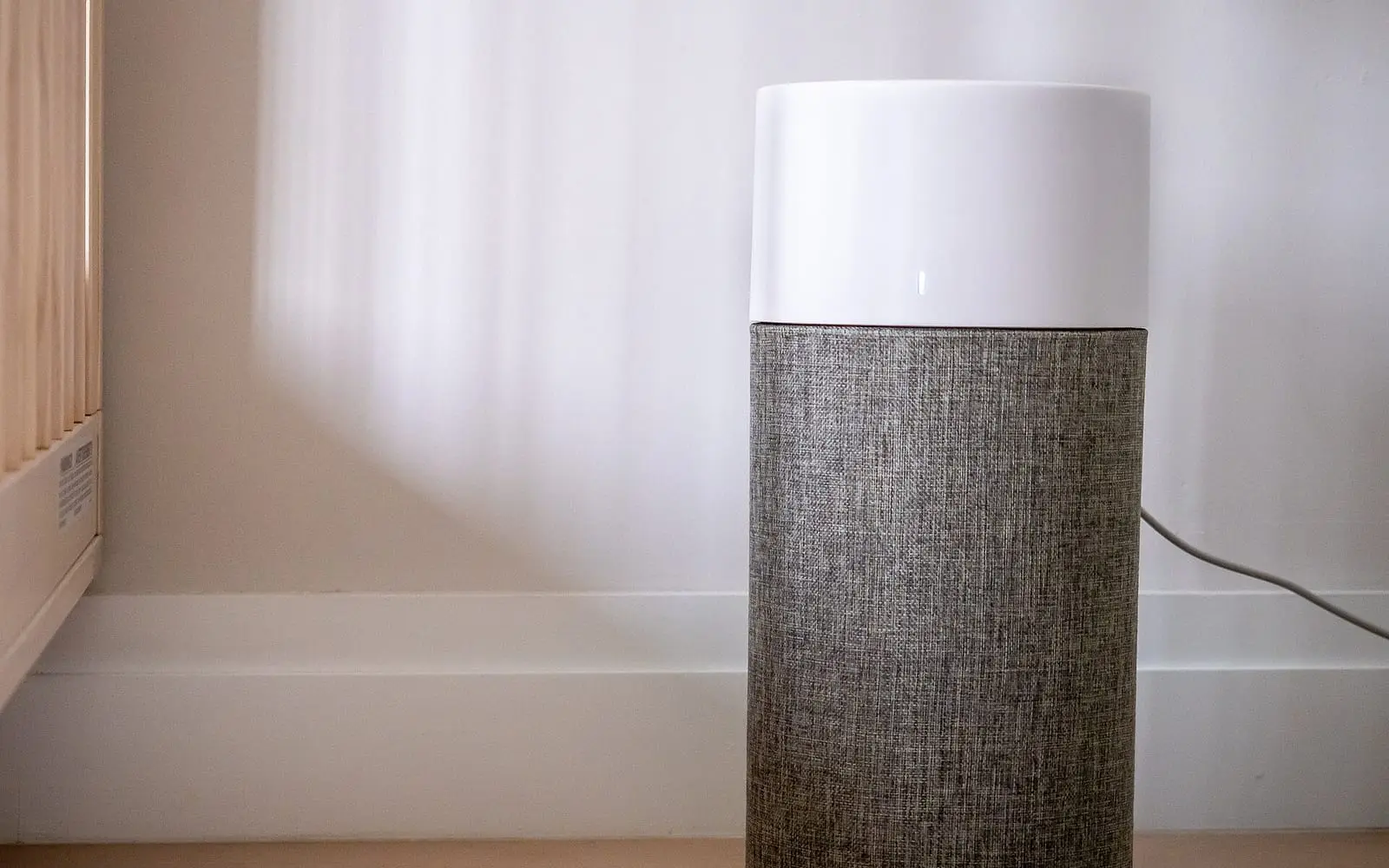
6. Blueair Blue Pure 211i Max — Best for Large Dusty Spaces
When dust is a problem in a large open space — a 500+ sq ft living room, an open-plan apartment, or a loft — the Blueair Blue Pure 211i Max is the answer. It purifies up to 635 sq ft in 12.5 minutes using HEPASilent dual filtration that combines mechanical and electrostatic capture. This technology is particularly effective for dust because the electrostatic charge attracts particles that might otherwise pass through a purely mechanical filter, achieving 99.97% capture at 0.1 microns.
The combination filter handles both particles and light odors. The built-in air quality sensor drives auto mode, adjusting fan speed based on real-time particle detection. WiFi connectivity with the Blueair app provides remote monitoring, scheduling, and filter life tracking. Alexa and Google Assistant integration adds voice control. Noise starts at 23 dB on low — the quietest large-room purifier available — and reaches 53 dB on high.
At $280-$300, the 211i Max is the most expensive purifier on this list, and the filter costs compound that: $50-$70 per filter with a 6-month recommended cycle means $100-$140 annually. In dusty environments, you might need to replace even more frequently. The fabric pre-filter cover ($15-$25) also needs periodic replacement. But for large spaces where no other single purifier provides adequate coverage, the 211i Max is the only option under $300 that genuinely handles 600+ sq ft.
The cylindrical design (22.7 x 14.4 x 14.4 inches, 16.2 lbs) with customizable fabric covers maintains Blueair’s Scandinavian aesthetic. Zero Ozone Verified by Intertek confirms safe operation. The 1-year warranty is the shortest on this list — a notable drawback for a premium-priced product.
What we like
- 635 sq ft coverage — largest on this list, ideal for open spaces
- HEPASilent captures 99.97% at 0.1 microns — superior to standard HEPA
- 23 dB on low — quietest large-room purifier available
- Electrostatic charge enhances dust capture beyond mechanical filtration
- Full smart features — WiFi, app, Alexa, Google Assistant
- Zero Ozone Verified — confirmed safe
- Attractive design with customizable fabric covers
Trade-offs
- Highest filter cost — $100-140/year, more in dusty environments
- 6-month filter cycle increases maintenance frequency
- At $280-300, most expensive on this list
- 1-year warranty — shortest on this list
- Built-in ionizer cannot be disabled
- Fabric pre-filter adds additional ongoing cost
7. Levoit Vital 200S — Best Budget Pick for Dust
The Levoit Vital 200S delivers dust-fighting performance that rivals purifiers costing $100 more. At $150-$170, its AHAM-verified CADR of 254 CFM for dust covers rooms up to 380 sq ft — and independent testing shows it clears particles faster than many mid-range competitors. The U-shaped air inlet is specifically designed to resist clogging from large dust particles and pet hair, which is a common failure point for cylindrical purifiers in dusty environments.
Three filter options let you optimize for your dust situation. The Standard filter handles general dust and allergens. The Pet Allergy filter adds enhanced carbon for homes where pet dander contributes to the dust load. The Toxin Absorber filter targets chemical particles and VOCs that attach to dust. All three use True HEPA filtration capturing 99.97% at 0.3 microns. Filters last approximately 12 months and cost $30-$45 — the lowest replacement cost for any purifier covering 300+ sq ft.
Smart features match more expensive Levoit models: VeSync app, Alexa and Google Assistant, auto mode with air quality sensor, and scheduling. The Light Detection feature automatically dims the display in dark rooms. Sleep mode operates at approximately 26 dB. The rectangular design (15.6 x 8.5 x 19.8 inches) is bulkier than cylindrical alternatives but provides a stable, tip-resistant form factor.
At $150-$170 with $30-$45 annual filter costs, the Vital 200S has the lowest total cost of ownership on this list. For bedrooms, home offices, and medium rooms where dust is a concern but budget is tight, it’s the clear value champion.
What we like
- 254 CFM dust CADR at $150-170 — best dust performance per dollar
- U-shaped inlet resists clogging from large dust and pet hair
- Three interchangeable filter options for different dust situations
- Full smart features — VeSync, Alexa, Google, auto mode
- 12-month filter life with $30-45 cost — lowest ongoing expense
- Light Detection for automatic display dimming
- AHAM-verified performance claims
Trade-offs
- Bulkier rectangular design
- 26 dB sleep mode is slightly louder than competitors
- Air quality sensor is less precise than laser-based sensors
- No washable pre-filter — entire filter unit replaced
- Turbo mode reaches 62 dB — loud
- 2-year warranty standard
Dust-Fighting Air Purifier Comparison Table
| Feature | Levoit 600S | Coway 200M | Winix 5510 | Honeywell HPA300 | Levoit 400S | Blueair 211i Max | Levoit Vital 200S |
|---|---|---|---|---|---|---|---|
| Price | $230-$300 | $200-$250 | $180-$200 | $180-$230 | $180-$220 | $280-$300 | $150-$170 |
| Dust CADR (CFM) | 391 | 246 | 253 | ~300 | ~260 | N/A (635 sq ft) | 254 |
| Room Coverage | 635 sq ft | 360 sq ft | 392 sq ft | 465 sq ft | 403 sq ft | 635 sq ft | 380 sq ft |
| HEPA Grade | H13 True HEPA | True HEPA | True HEPA | True HEPA | H13 True HEPA | HEPASilent (0.1µm) | True HEPA |
| Washable Pre-filter | No | Yes | Yes | No | No | Fabric cover | No |
| Air Quality Sensor | Laser (PM2.5) | Particle | Particle | No | Laser (PM2.5) | Yes | Yes |
| WiFi/App | Yes (VeSync) | No | Yes (Winix) | No | Yes (VeSync) | Yes (Blueair) | Yes (VeSync) |
| Noise (Low) | 26 dB | ~24 dB | ~25 dB | ~40 dB | 24 dB | 23 dB | ~26 dB |
| Annual Filter Cost | $55-$90 | $65-$90 | $40-$55 | $75-$100 | $40-$70 | $100-$140 | $30-$45 |
| Warranty | 2 years | 3 years | 2 years | 5 years | 2 years | 1 year | 2 years |
| Best For | Large dusty rooms | Reliable mid-range | Dust + odors | Raw power | Smart dust monitoring | Large open spaces | Budget dust control |
| Our Rating | 9.3/10 | 9.0/10 | 8.9/10 | 8.4/10 | 8.8/10 | 8.7/10 | 9.0/10 |
How to Maximize Dust Removal with Your Air Purifier
Run It 24/7 — Seriously
Dust is generated continuously. Every time someone walks, sits down, opens a door, or moves fabric, dust becomes airborne. Running your purifier only at night or for a few hours means dust accumulates during off periods. Modern HEPA purifiers on low speed draw 10-30W — that’s $1-$4/month in electricity. The cost of continuous operation is negligible compared to the air quality benefit. Set it to auto mode and let the sensor manage fan speed.
Place It Where Dust Originates
Position the purifier near the primary dust source in each room. Near the bed (skin cells and dust mites), near pet areas (dander and hair), near windows (outdoor dust infiltration), or near high-traffic pathways (stirred-up floor dust). Avoid corners where airflow is restricted. The purifier needs clear space around its intake and outlet — at least 12-18 inches from walls and furniture.
Maintain Pre-Filters Religiously
In dusty homes, pre-filters clog faster than HEPA filters. A clogged pre-filter restricts airflow, reducing CADR and forcing the motor to work harder. If your purifier has a washable pre-filter (Coway 200M, Winix 5510), rinse it every 2-4 weeks. If it uses a disposable pre-filter (Honeywell HPA300), check it monthly and replace when visibly gray. This single maintenance step can extend HEPA filter life by 30-50%.
Combine with Source Control
An air purifier reduces airborne dust but doesn’t address the source. Combine it with: regular vacuuming with a HEPA-filtered vacuum (weekly minimum), damp dusting surfaces (dry dusting just redistributes particles), washing bedding in hot water weekly (kills dust mites), using allergen-proof mattress and pillow covers, and maintaining 30-50% humidity (dust mites thrive above 50%, but below 30% increases airborne dust). The purifier handles what these measures miss.
Frequently Asked Questions
Q: Will an air purifier eliminate dust in my home?
No. An air purifier captures airborne dust particles, but dust is continuously generated from skin cells, textiles, outdoor infiltration, and activity. What a purifier does is significantly reduce the concentration of respirable dust — the particles you inhale that trigger allergies and respiratory issues. You’ll also notice less dust settling on surfaces because the purifier captures particles before they land. But you’ll still need to dust and vacuum regularly. Think of the purifier as reducing the dust load by 50-80%, not eliminating it.
Q: What CADR rating do I need for dust?
The general rule is 2/3 of your room’s square footage. For a 300 sq ft room, you want at least 200 CFM CADR. For a 450 sq ft room, aim for 300+ CFM. Higher is always better for dust because larger particles settle quickly — you need strong airflow to capture them before they land. If your home is particularly dusty (pets, near construction, arid climate), size up by 25-50% beyond the 2/3 rule.
Q: How often should I replace filters in a dusty home?
More often than the manufacturer suggests. Most HEPA filters are rated for 6-12 months under “normal” conditions. In dusty homes, expect 4-8 months. The filter change indicator on your purifier is the best guide — it tracks actual airflow resistance, not just calendar time. If you notice reduced airflow, increased noise at the same speed setting, or visible dust on the HEPA filter surface, it’s time to replace regardless of what the timer says.
Q: Is a HEPA purifier better than an ionic purifier for dust?
Yes, significantly. HEPA purifiers physically capture dust particles in a filter — they’re removed from the air permanently. Ionic purifiers charge particles so they stick to surfaces (walls, furniture, floors), which removes them from the air but deposits them around your room. You’re trading airborne dust for surface dust, and the particles can become airborne again when disturbed. Additionally, some ionic purifiers produce ozone as a byproduct, which is a respiratory irritant. For dust removal, True HEPA is the proven, safe technology.
Q: Should I get one large purifier or two smaller ones for dust?
For a single room, one appropriately sized purifier is more efficient. For multiple rooms or an L-shaped space, two smaller units provide better coverage because air purifiers can’t effectively clean around corners or through doorways. Two Levoit Vital 200S units ($340 total) covering two rooms will reduce dust more effectively than one Levoit Core 600S ($280) in a single room. Match the purifier to the room, not the house.
The Bottom Line
The Levoit Core 600S leads this list with the highest CADR and most advanced dust monitoring, making it the best choice for large rooms where dust is a persistent problem. For medium rooms on a tighter budget, the Coway Airmega 200M’s washable pre-filter and proven reliability make it the most practical choice — especially in homes where pre-filter maintenance is the key to long-term performance. And the Levoit Vital 200S at $150-$170 proves that effective dust control doesn’t require a premium price tag.
Whatever you choose, the most important factor is running it continuously. A $150 purifier running 24/7 will remove more dust than a $500 purifier running 4 hours a day.
Specs and prices are checked against manufacturer documentation and current retail listings at the time of writing and can change. Read how we test and our editorial policy. Spotted an error? Tell us.