Dust Mites: How to Reduce Them in Your Home
Dust mites trigger allergies in over 20 million Americans. Learn what dust mites are, where they hide, and proven strategies to reduce them in bedding, carpets, and furniture.
In this guide
- Understanding Dust Mites: What You’re Dealing With
- The Allergy Connection: Why Dust Mites Make You Sick
- Strategy 1: Control Humidity (The Most Effective Single Step)
- Strategy 2: Protect Your Bed (Where It Matters Most)
- Strategy 3: Clean Strategically
- Strategy 4: Modify Your Home Environment
- Strategy 5: Air Purifiers and Filtration
- Strategy 6: Chemical and Natural Treatments
- A Room-by-Room Action Plan
- What Doesn’t Work (Common Myths)
- When to See a Doctor
- Frequently Asked Questions
- The Bottom Line
Dust mites are microscopic arachnids that live in virtually every home on the planet. They feed on the dead skin cells that humans and pets shed daily, and they thrive in the warm, humid environments that our bedrooms, couches, and carpeted floors provide. The mites themselves are harmless — they don’t bite, sting, or burrow into skin. The problem is their waste. Dust mite fecal pellets contain potent allergenic proteins (primarily Der p 1 and Der f 1) that trigger allergic rhinitis, asthma, and eczema in sensitized individuals. Research suggests that approximately 20 million Americans are allergic to dust mites, and about 84% of U.S. homes have detectable levels of dust mite allergens in bedding. You can’t eliminate dust mites entirely, but you can reduce their populations dramatically with the right combination of strategies.
Understanding Dust Mites: What You’re Dealing With
House dust mites (Dermatophagoides pteronyssinus and Dermatophagoides farinae) are the two most common species found in homes. They measure 0.2-0.3 mm — invisible to the naked eye — and have translucent bodies with eight legs. A single mattress can harbor tens of thousands to millions of dust mites, depending on age, humidity, and cleaning habits.
Lifecycle and Reproduction
Dust mites go through five life stages: egg, six-legged larva, two eight-legged nymph stages, and adult. Under optimal conditions (around 77°F / 25°C and 75% relative humidity), the entire lifecycle from egg to adult takes approximately 3-4 weeks. Adults live for about 2-3 months. A healthy female can produce up to 60 eggs during her reproductive period of 26-34 days. This rapid reproduction rate means that populations can explode quickly in favorable conditions — and explains why controlling environmental factors is so important.
What They Need to Survive
- Food: Dead skin cells (humans shed roughly 1.5 grams per day — enough to feed about a million dust mites)
- Moisture: Dust mites absorb water directly from the air. They need relative humidity above 50% to survive and thrive best at 70-80% RH. Below 50% RH, they dehydrate and die within days to weeks.
- Temperature: They prefer 68-77°F (20-25°C) — the same range most people keep their homes
- Shelter: Fabric fibers in mattresses, pillows, carpets, upholstered furniture, and stuffed animals provide ideal habitat
Where Dust Mites Concentrate
Not all areas of your home are equally infested. Dust mites concentrate where moisture, warmth, and skin cells converge:
| Location | Why Mites Thrive Here | Relative Mite Density |
|---|---|---|
| Mattresses | Body heat + moisture from sweat + abundant skin cells | Very High |
| Pillows | Direct contact with face/scalp, moisture from breathing | Very High |
| Bedding (sheets, blankets, comforters) | Warm, skin-cell-rich environment | High |
| Upholstered furniture (sofas, armchairs) | Body contact, fabric fibers trap skin cells | High |
| Carpets and rugs | Trap skin cells, dust, and moisture | Moderate to High |
| Stuffed animals and soft toys | Fabric fibers, often in bedrooms near sleeping areas | Moderate |
| Curtains and drapes | Fabric collects dust and skin cells | Low to Moderate |
| Pet bedding | Animal dander + warmth + moisture | High |
The Allergy Connection: Why Dust Mites Make You Sick
It’s not the mites themselves that cause allergic reactions — it’s their fecal pellets and body fragments. Each dust mite produces approximately 20 fecal pellets per day, and these pellets contain the proteins Der p 1 and Der p 2 (from D. pteronyssinus) and Der f 1 and Der f 2 (from D. farinae) that the immune system of sensitized individuals recognizes as threats.
Dust mite fecal particles are roughly 10-20 microns in diameter — large enough to settle on surfaces relatively quickly but small enough to become temporarily airborne when disturbed (making the bed, vacuuming, walking on carpet, sitting on upholstered furniture). Once inhaled, these particles trigger an IgE-mediated immune response.
Common Symptoms of Dust Mite Allergy
- Sneezing, especially upon waking
- Runny or stuffy nose (allergic rhinitis)
- Itchy, watery, or red eyes
- Postnasal drip
- Coughing
- Facial pressure and pain
- Worsening of asthma symptoms (wheezing, chest tightness, difficulty breathing)
- Eczema flare-ups (atopic dermatitis)
- Disrupted sleep due to congestion
Symptoms are often worst at night and in the morning because you spend 6-8 hours in close contact with the highest concentration of mite allergens — your bed. If you consistently wake up congested, sneezing, or with itchy eyes, and symptoms improve when you leave the house, dust mite allergy is a strong possibility. An allergist can confirm the diagnosis with a skin prick test or specific IgE blood test.
Children and Dust Mites
Children are particularly vulnerable. Research indicates that children exposed to high levels of dust mite allergens are up to five times more likely to develop asthma. Early and sustained exposure during infancy and early childhood can sensitize the immune system, potentially leading to lifelong allergic disease. This makes dust mite control especially important in nurseries and children’s bedrooms.
Strategy 1: Control Humidity (The Most Effective Single Step)
Humidity control is the single most impactful thing you can do to reduce dust mite populations. Dust mites cannot drink water — they absorb moisture directly from the air through their bodies. When relative humidity drops below 50%, they lose water faster than they can absorb it, and they dehydrate and die. Research consistently shows that maintaining indoor humidity below 50% is the most effective long-term strategy for dust mite control.
How to Reduce Indoor Humidity
- Use a dehumidifier in bedrooms and living areas, especially during humid months. Set it to maintain 30-50% RH.
- Run air conditioning during summer — AC naturally dehumidifies indoor air
- Use exhaust fans in bathrooms and kitchens to remove moisture at the source
- Avoid drying clothes indoors (a single load of laundry releases several liters of moisture into the air)
- Ensure adequate ventilation — open windows when outdoor humidity is low
- Fix any water leaks, condensation issues, or damp areas promptly
- Avoid using humidifiers in bedrooms if you have a dust mite allergy (this directly feeds the mites)
A hygrometer (humidity meter) is an inexpensive tool ($10-20) that lets you monitor indoor humidity levels. Place one in the bedroom to track conditions where you sleep.
Strategy 2: Protect Your Bed (Where It Matters Most)
You spend roughly a third of your life in bed, making it the single most important battleground for dust mite control. Your mattress, pillows, and bedding harbor the highest concentrations of mites and allergens in the home.
Allergen-Proof Encasements
Encasing your mattress, box spring, and pillows in allergen-proof covers is one of the most well-studied interventions. These covers create a physical barrier between you and the mites living inside the mattress. Studies have shown that impermeable mattress encasements can reduce Der p 1 allergen levels by up to 87%. Properly sealed zippered encasements can block over 99% of dust mite allergens from escaping into the sleeping environment.
What to look for in encasements:
- Pore size of 6 microns or less (dust mite fecal particles are 10-20 microns, so anything under 10 microns blocks them effectively)
- Zippered closure with a fabric flap covering the zipper
- Breathable material (microfiber weave or membrane-lined fabric) — you want to block allergens, not trap heat and moisture
- Machine washable
- Look for products tested and certified for allergen barrier effectiveness
Wash Bedding Weekly in Hot Water
Sheets, pillowcases, blankets, and duvet covers should be washed weekly in hot water — at least 130°F (54°C). This temperature kills dust mites and denatures their allergenic proteins. Warm or cold water removes allergens from the surface but doesn’t kill the mites themselves. If you can’t wash in hot water (some fabrics don’t tolerate it), tumble drying on high heat for at least 15 minutes after washing will kill mites.
Replace Pillows Regularly
Pillows accumulate dust mite allergens over time, even with encasements. Consider replacing pillows every 1-2 years. Synthetic-fill pillows can be washed in hot water more easily than down or feather pillows, making them a practical choice for allergy sufferers.
Consider Your Mattress Age
An older mattress can contain millions of dust mites and significant allergen accumulation. While encasements help, a mattress that’s 8-10+ years old may benefit from replacement. When shopping for a new mattress, consider options with removable, washable covers.
Strategy 3: Clean Strategically
Regular cleaning removes dust mite allergens from surfaces, but the wrong cleaning methods can actually make things worse by stirring up allergens into the air. Here’s how to clean effectively.
Vacuuming
- Use a vacuum with a HEPA filter or a sealed system that prevents allergens from being blown back into the air. A standard vacuum without HEPA filtration can actually increase airborne allergen levels during and after vacuuming.
- Vacuum carpets, rugs, and upholstered furniture at least twice per week
- Vacuum mattresses monthly (use the upholstery attachment)
- Vacuum slowly — one pass per second — to allow the suction to pull allergens from deep in the fibers
- If you’re highly allergic, wear a mask while vacuuming or have someone else do it. Allergen levels remain elevated for 20-30 minutes after vacuuming.
Dusting
- Use a damp cloth or microfiber cloth for dusting — dry dusting just redistributes allergens into the air
- Dust all surfaces weekly, including shelves, nightstands, window sills, and baseboards
- Don’t forget ceiling fan blades, light fixtures, and the tops of door frames
Steam Cleaning
Steam cleaners that produce steam at 130°F (54°C) or higher kill dust mites on contact. Steam cleaning is effective for mattresses, upholstered furniture, carpets, and other surfaces that can’t be machine washed. However, be cautious about moisture — ensure surfaces dry completely afterward to avoid creating the humid conditions that mites love.
Strategy 4: Modify Your Home Environment
Some changes to your home’s furnishings and layout can significantly reduce dust mite habitat.
Flooring
Carpeting is a major dust mite reservoir. Hard flooring (hardwood, tile, laminate, vinyl) harbors far fewer mites because there are no fibers to trap skin cells and moisture. If possible:
- Replace wall-to-wall carpeting with hard flooring, especially in bedrooms
- If you keep carpet, choose low-pile over high-pile (shag carpets are the worst for dust mites)
- Use washable area rugs on hard floors instead of permanent carpet — wash them in hot water regularly
Window Treatments
- Replace heavy drapes and curtains with washable curtains, roller blinds, or shutters
- If you keep fabric curtains, wash them monthly in hot water
Declutter
Every soft surface and fabric item in a room is potential dust mite habitat. Reducing clutter — especially in bedrooms — reduces the total mite population:
- Remove stuffed animals from beds (or wash them weekly in hot water, or freeze them for 24 hours to kill mites, then wash to remove allergens)
- Minimize decorative pillows and throws
- Store books, magazines, and knick-knacks in closed cabinets rather than open shelves
- Keep clothing in closed drawers and closets
Furniture Choices
- Leather, vinyl, or wood furniture harbors fewer mites than upholstered fabric furniture
- If you have upholstered furniture, vacuum it regularly with a HEPA vacuum and consider allergen-proof covers
Strategy 5: Air Purifiers and Filtration
Air purifiers play a supporting role in dust mite allergen control, but they have important limitations. Dust mite allergen particles (10-20 microns) are relatively large and heavy compared to other airborne pollutants. They settle out of the air quickly — typically within minutes of being disturbed — which means they spend most of their time on surfaces, not floating in the air where a purifier can capture them.
What Air Purifiers Can Do
- Capture dust mite allergens that become temporarily airborne (when you make the bed, vacuum, walk on carpet, or sit on upholstered furniture)
- Reduce overall particulate levels in the room, which can provide some symptom relief
- A HEPA filter captures 99.97% of particles 0.3 microns and larger — dust mite allergen particles at 10-20 microns are well within this range
What Air Purifiers Cannot Do
- Remove allergens embedded in mattresses, pillows, carpets, or upholstery — the allergens must be airborne to be captured
- Replace source control measures (encasements, washing, humidity control)
- Significantly reduce settled allergen levels on surfaces
Research has shown mixed results for air purifiers as a standalone dust mite intervention. A cross-over controlled study found that HEPA air purifiers alone did not significantly reduce indoor dust mite allergen levels or improve allergy symptoms. However, when used as part of a comprehensive strategy (encasements + washing + humidity control + air purifier), they contribute to overall allergen reduction.
If You Use an Air Purifier
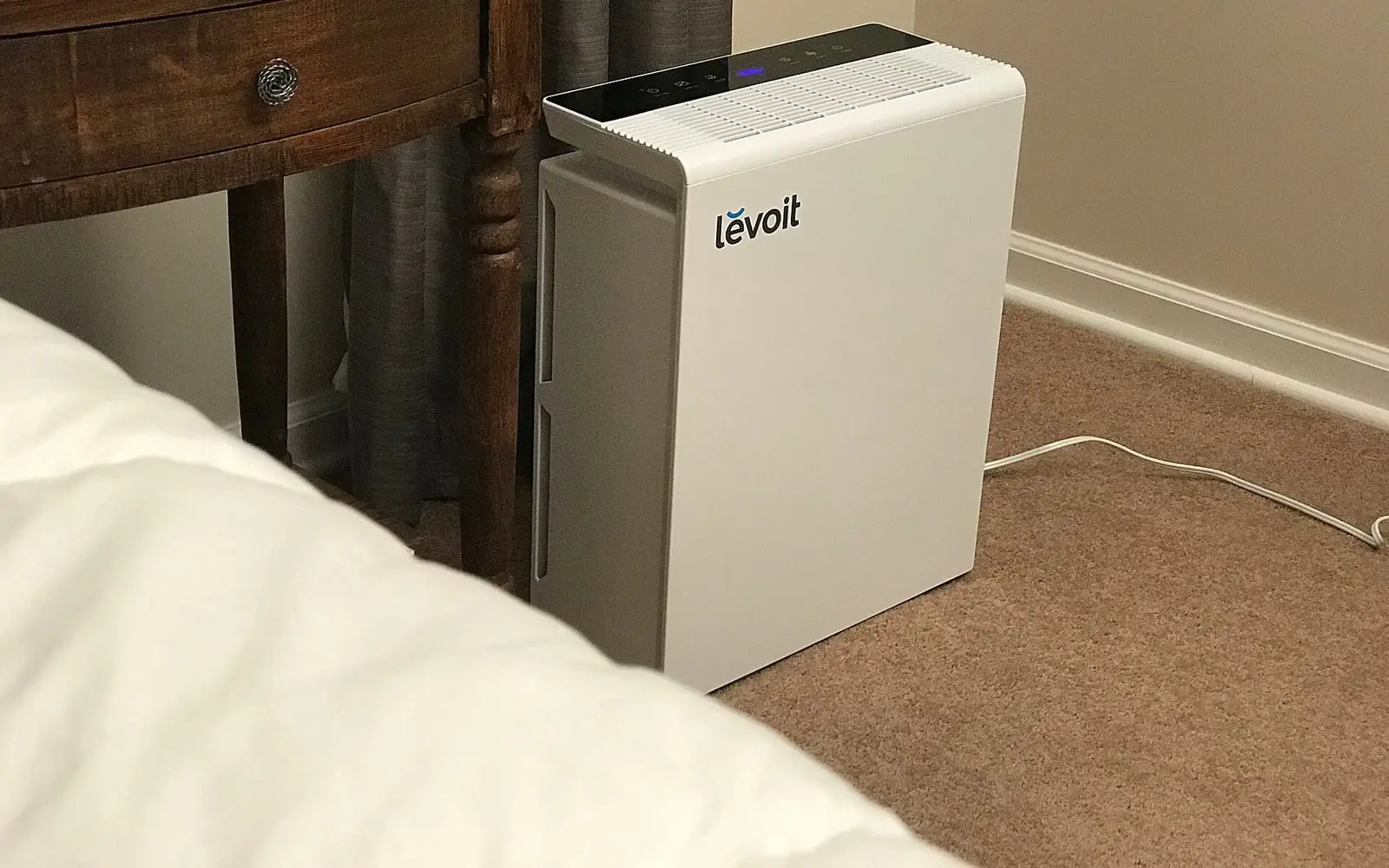
- Place it in the bedroom, as close to the bed as practical
- Run it continuously, not just at night
- Choose a unit with a true HEPA filter rated for your room size
- Also upgrade your HVAC filter to MERV 11-13 — this captures dust mite allergens as air circulates through your heating and cooling system
Strategy 6: Chemical and Natural Treatments
Several products are marketed for dust mite control. Here’s what the evidence says:
Acaricides (Mite-Killing Sprays)
Products containing benzyl benzoate or tannic acid can kill dust mites or denature their allergens on surfaces. However, their effectiveness is limited and temporary — they don’t penetrate deep into mattresses or carpet padding, and mite populations recover quickly. Most allergists consider acaricides a supplementary measure at best, not a primary strategy.
Diatomaceous Earth
Food-grade diatomaceous earth (DE) is a fine powder made from fossilized algae. It damages the exoskeletons of dust mites, causing them to dehydrate. Some people sprinkle it on carpets and mattresses, leave it for several hours, then vacuum it up. While DE does kill mites on contact, it’s messy, can irritate airways if inhaled (use a mask during application), and doesn’t address allergens already present. It’s a supplementary tool, not a solution.
Essential Oils
Tea tree oil, eucalyptus oil, and clove oil have shown some acaricidal properties in laboratory studies. However, concentrations needed to kill mites in real-world conditions are much higher than what’s practical for home use, and essential oils can trigger respiratory irritation in some people — especially those with asthma. Don’t rely on essential oils as a primary dust mite control method.
UV-C Light Devices
Handheld UV-C devices marketed for mattress sanitization can kill dust mites and bacteria on surfaces. However, UV-C light only works on the surface it directly contacts — it doesn’t penetrate fabric to reach mites living deeper in the mattress. Effectiveness depends on exposure time and distance, and most consumer devices require very slow, close passes to be effective. Consider them a supplement to, not a replacement for, encasements and washing.
A Room-by-Room Action Plan
Bedroom (Highest Priority)
- Encase mattress, box spring, and all pillows in allergen-proof covers
- Wash all bedding weekly in hot water (130°F / 54°C minimum)
- Keep humidity below 50% (use a dehumidifier if needed)
- Remove carpet if possible; use washable rugs on hard floors
- Vacuum floors and under the bed twice weekly with a HEPA vacuum
- Remove or minimize stuffed animals, decorative pillows, and fabric items
- Run a HEPA air purifier continuously
- Keep pets out of the bedroom (pet dander is additional food for mites)
Living Room
- Vacuum upholstered furniture weekly with a HEPA vacuum
- Consider leather or vinyl furniture if allergies are severe
- Vacuum carpets and rugs twice weekly
- Wash throw blankets and removable cushion covers regularly
- Dust all surfaces weekly with a damp cloth
Children’s Rooms
- Follow all bedroom recommendations above
- Limit stuffed animals to one or two favorites; wash them weekly in hot water or freeze for 24 hours then wash
- Store toys in closed bins rather than open shelves
- Choose washable, hard-surface toys over fabric toys when possible
What Doesn’t Work (Common Myths)
- Sunlight exposure: While UV light can kill mites, simply placing bedding in sunlight doesn’t provide sufficient UV exposure to significantly reduce populations. It helps with moisture reduction but isn’t a reliable mite-killing method.
- Freezing alone: Putting items in the freezer for 24 hours kills mites, but it doesn’t remove the allergens. You still need to wash the item afterward to remove the allergenic proteins.
- Air purifiers alone: As discussed above, air purifiers can’t address the primary source of exposure — allergens in bedding and on surfaces.
- Ionizers and ozone generators: These are not effective against dust mites and can produce harmful byproducts. Ozone generators are particularly dangerous for people with asthma.
- Hypoallergenic bedding (without encasements): Marketing terms like “hypoallergenic” on pillows and mattresses don’t mean they resist dust mite colonization. Without proper encasements, any bedding will accumulate mites over time.
When to See a Doctor
If environmental control measures don’t adequately manage your symptoms, consult an allergist. Medical treatments for dust mite allergy include:
- Antihistamines (oral or nasal spray) for rhinitis symptoms
- Nasal corticosteroid sprays (fluticasone, mometasone) for persistent nasal congestion and inflammation
- Leukotriene modifiers (montelukast) for combined rhinitis and asthma
- Allergen immunotherapy (allergy shots or sublingual tablets) — this is the only treatment that modifies the underlying immune response. Dust mite sublingual immunotherapy tablets (such as Odactra) are FDA-approved and can reduce symptoms and medication use over time.
Immunotherapy is particularly worth discussing with your allergist if you have moderate to severe symptoms that don’t respond well to environmental controls and medications, or if you want a long-term solution rather than ongoing symptom management.
Frequently Asked Questions
Q: Can you ever completely eliminate dust mites from your home?
No. Dust mites are ubiquitous — they exist in virtually every home worldwide. The goal isn’t elimination but reduction to levels that don’t trigger significant allergic symptoms. A comprehensive approach (humidity control + encasements + regular washing + HEPA vacuuming) can reduce allergen levels by 90% or more, which is sufficient for most people to experience meaningful symptom relief.
Q: How quickly will I notice improvement after implementing these strategies?
Encasements and bedding washing provide the fastest results — many people notice improvement within 1-2 weeks. Humidity control takes longer because existing mite populations need time to die off (2-4 weeks at low humidity). Full benefit from a comprehensive approach typically takes 4-8 weeks as allergen levels gradually decrease throughout the home.
Q: Are dust mites worse in certain climates?
Yes. Dust mites thrive in humid climates and are less prevalent in arid regions. Coastal areas, the southeastern United States, and tropical climates tend to have higher dust mite populations. However, even in dry climates, the microenvironment inside a mattress or pillow can be humid enough to support mites — so no region is completely free of them.
Q: Do dust mites bite?
No. Dust mites do not bite, sting, or burrow into skin. They feed exclusively on dead skin cells that have already been shed. The itching and skin irritation associated with dust mite allergy is caused by an immune reaction to their allergenic proteins, not by physical contact with the mites.
Q: Should I get rid of my carpet?
If you have significant dust mite allergy, replacing bedroom carpet with hard flooring is one of the most impactful changes you can make. Carpet acts as a reservoir for dust mite allergens that’s difficult to clean thoroughly. If replacing carpet isn’t feasible, frequent HEPA vacuuming (2-3 times per week) and professional steam cleaning every 6-12 months can help manage allergen levels.
The Bottom Line
Dust mite control is about making your home less hospitable to these microscopic creatures while removing the allergens they produce. No single measure is sufficient — the most effective approach combines humidity control, allergen-proof bedding encasements, regular hot-water washing, HEPA vacuuming, and reducing fabric surfaces in the home. Focus your efforts on the bedroom first, since that’s where you have the longest and closest exposure. An air purifier can help as part of this comprehensive strategy, but it’s not a substitute for addressing the sources directly. With consistent effort, most people with dust mite allergies can achieve significant symptom relief without medication — or at least reduce their need for it.
Specs and prices are checked against manufacturer documentation and current retail listings at the time of writing and can change. Read how we test and our editorial policy. Spotted an error? Tell us.