Blueair vs Coway Air Purifier: Mid-Range Showdown
Blueair's HEPASilent large-room power vs Coway's legendary value and quiet operation. We compare the Blue Pure 211i Max and Airmega 200M on specs, noise, filters, and real-world value.
In this guide
Blueair and Coway are two of the most respected names in air purification, and they represent the sweet spot of the market — genuine performance without the premium tax of brands like Dyson or IQAir. Coway’s Airmega 200M (the successor to the legendary AP-1512HH Mighty) has been the default recommendation from Wirecutter, Consumer Reports, and countless review outlets for years. Blueair’s Blue Pure 211i Max has emerged as the go-to choice for larger rooms, with its HEPASilent technology delivering impressive CADR numbers in a surprisingly quiet package. Both are excellent purifiers, but they’re optimized for different situations.
This comparison pits the Blueair Blue Pure 211i Max ($300-$350) against the Coway Airmega 200M ($150-$180) — and extends to the Coway Airmega 400 ($350-$500) for a more size-matched comparison. We’ll cover filtration technology, coverage, noise, smart features, filter costs, and the practical question of which one belongs in your home.
Brand Overview
Blueair
Swedish-founded Blueair (now owned by Unilever) has been making air purifiers since 1996. The brand’s signature is HEPASilent technology — a combination of mechanical HEPA filtration and electrostatic charging that allows the filters to capture particles with less airflow resistance. This means Blueair purifiers can move more air through the filter at lower fan speeds, resulting in higher CADR ratings at lower noise levels than purely mechanical HEPA systems. The Blue Pure line targets the consumer market with colorful fabric pre-filters and a minimalist Scandinavian design aesthetic.
Key Blueair strengths: HEPASilent technology for high CADR at low noise, excellent large-room coverage (the 211i Max covers 635 sq ft), WiFi and app control on “i” models, Energy Star certification, and a clean Scandinavian design. The brand’s weakness is filter cost — replacement filters run higher than most competitors.
Coway
South Korean Coway has been in the air and water purification business since 1989. The Airmega 200M is arguably the most recommended air purifier in the world — it’s been the top pick at Wirecutter for years, consistently ranks high at Consumer Reports, and has earned a reputation for delivering reliable performance at an accessible price. Coway’s approach is straightforward: proven 4-stage filtration (pre-filter, carbon, True HEPA, Vital Ion), responsive auto mode, quiet operation, and a price that makes clean air accessible to most budgets.
Key Coway strengths: Unmatched value proposition (the 200M delivers premium-level filtration at $150-$180), 4-stage filtration with Vital Ion, extremely quiet operation (24 dB on low), eco mode for energy savings, 3-year warranty, and the most extensive track record of positive independent reviews in the category.
Head-to-Head: Blueair Blue Pure 211i Max vs Coway Airmega 200M
Filtration Technology
Blueair Blue Pure 211i Max uses HEPASilent dual filtration: an electrostatic charging chamber gives incoming particles a negative charge, then a mechanical filter captures these charged particles with less resistance than a standard HEPA filter. The result is 99.97% particle capture at 0.1 microns with higher airflow and lower noise than purely mechanical systems. The combination filter includes an activated carbon layer for odor and VOC reduction. A washable fabric pre-filter (available in multiple colors) captures large particles and adds a design element.
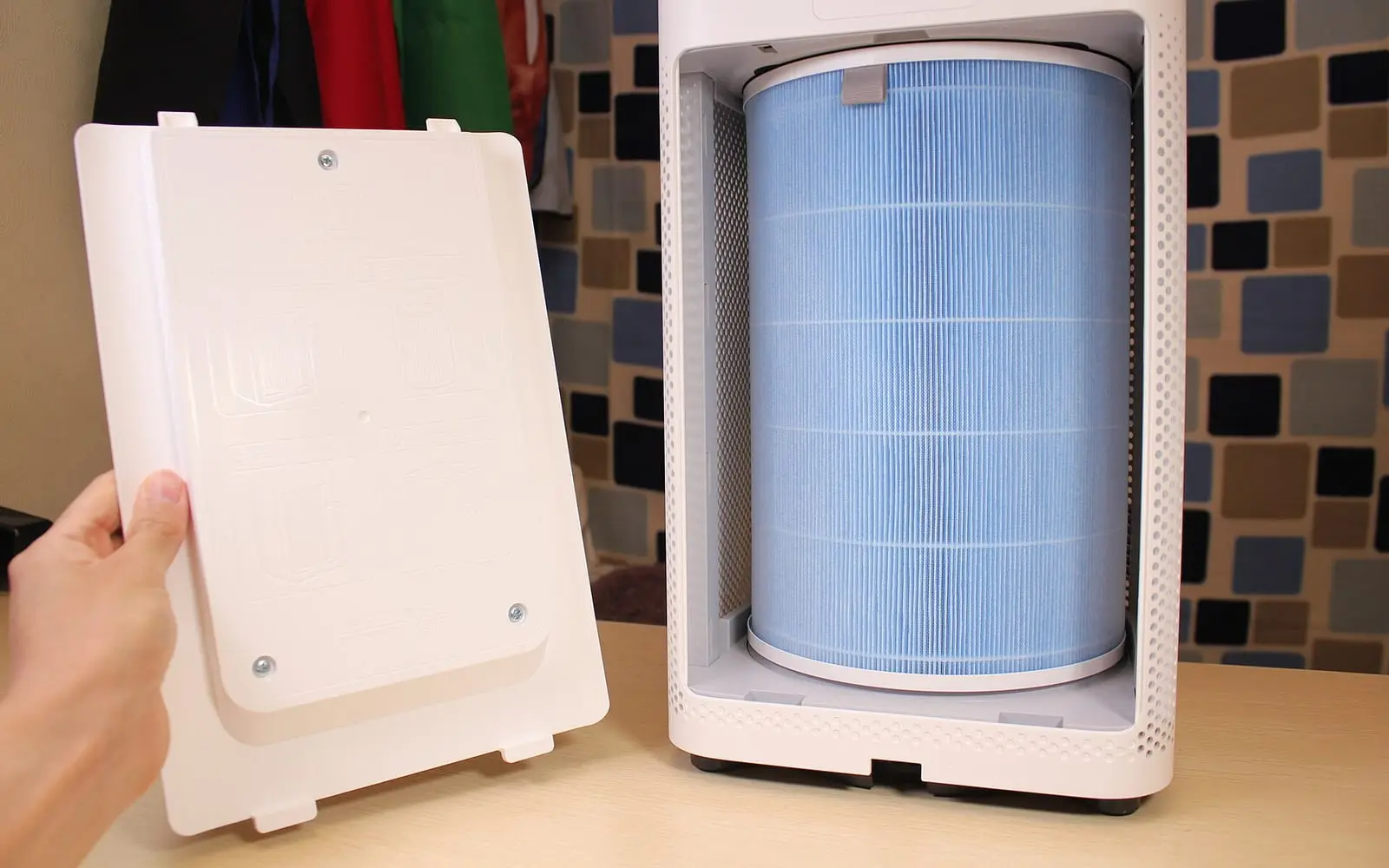
Coway Airmega 200M uses a 4-stage mechanical system: a washable pre-filter for large particles, a deodorization carbon filter for odors and VOCs, a True HEPA filter capturing 99.97% of particles at 0.3 microns, and Vital Ion technology that releases negative ions to enhance particle capture. The Vital Ion feature can be toggled off for users who prefer purely mechanical filtration.
Both approaches are effective, but they differ in philosophy. Blueair’s electrostatic charging allows for higher airflow at lower noise — the filter doesn’t need to be as dense because charged particles are easier to capture. Coway relies on traditional mechanical filtration density, which is simpler but requires more fan power to push air through. Blueair’s approach captures particles at 0.1 microns versus Coway’s 0.3 microns — a technical advantage for ultrafine particle removal, though both sizes are well below what’s visible or commonly measured in home environments.
One consideration: Blueair’s electrostatic charging is a form of ionization, and the 211i Max doesn’t allow you to disable it. Some users prefer purifiers without any ionization technology. Coway’s Vital Ion can be turned off, giving users the choice.
CADR and Coverage
This is where the comparison gets lopsided — these purifiers target different room sizes:
Blueair Blue Pure 211i Max: CADR of 410 CFM for smoke, dust, and pollen (AHAM Verifide). Covers 635 sq ft with 5 air changes per hour, or up to 3,000 sq ft with 1 air change per hour. Cleans a 635 sq ft room in approximately 12.5 minutes.
Coway Airmega 200M: CADR of 246 CFM (dust), 240 (pollen), 233 (smoke) (AHAM Verifide). Covers 361 sq ft with 5 air changes per hour. Cleans the room in approximately 12.5 minutes.
The Blueair covers nearly twice the area — 635 vs 361 sq ft. This isn’t a subtle difference; it’s a different product category. The 211i Max is a large-room purifier; the 200M is a medium-room purifier. For open-concept living spaces, large living rooms, or basements, the Blueair is the clear choice. For bedrooms, home offices, and standard-sized rooms under 350 sq ft, the Coway is more than sufficient.
Noise Levels
Despite its much higher CADR, the Blueair is impressively quiet thanks to HEPASilent technology:
Blueair Blue Pure 211i Max: Approximately 23 dB on the lowest setting, up to approximately 56 dB on high. The low setting is near-silent — remarkable for a purifier with 410 CFM CADR capability.
Coway Airmega 200M: Approximately 24 dB on the lowest setting, up to approximately 53 dB on high. The low setting is whisper-quiet and has been a key selling point for bedroom use.
On low settings, both are essentially inaudible — the 1 dB difference between 23 and 24 dB is imperceptible to human ears. On high settings, the Coway is slightly quieter (53 vs 56 dB), but the Blueair is moving significantly more air at its maximum. Noise-per-CFM, the Blueair is actually the quieter unit — HEPASilent technology delivers on its promise of high airflow at low noise.
Smart Features
Blueair Blue Pure 211i Max: WiFi connectivity, Blueair app with real-time air quality monitoring (PM2.5 and PM10), filter life tracking, scheduling, and remote control. Compatible with Amazon Alexa and Google Assistant. The app provides detailed air quality data and historical trends. Auto mode adjusts fan speed based on detected particle levels.
Coway Airmega 200M: No WiFi, no app, no voice assistant support. The unit has a particle sensor driving the 3-color air quality LED and auto mode, plus an eco mode that turns off the fan when air quality is consistently good. Controls are manual — buttons on the top panel. For Coway with smart features, you’d need the Airmega 250S ($250-$350) or 400S ($450-$650).
Blueair wins on connectivity. If app control, remote monitoring, and voice commands are important, the 211i Max delivers a full smart experience. If you prefer a simple, reliable purifier that doesn’t need WiFi, the Coway’s manual controls and responsive auto mode work perfectly well.
Design and Footprint
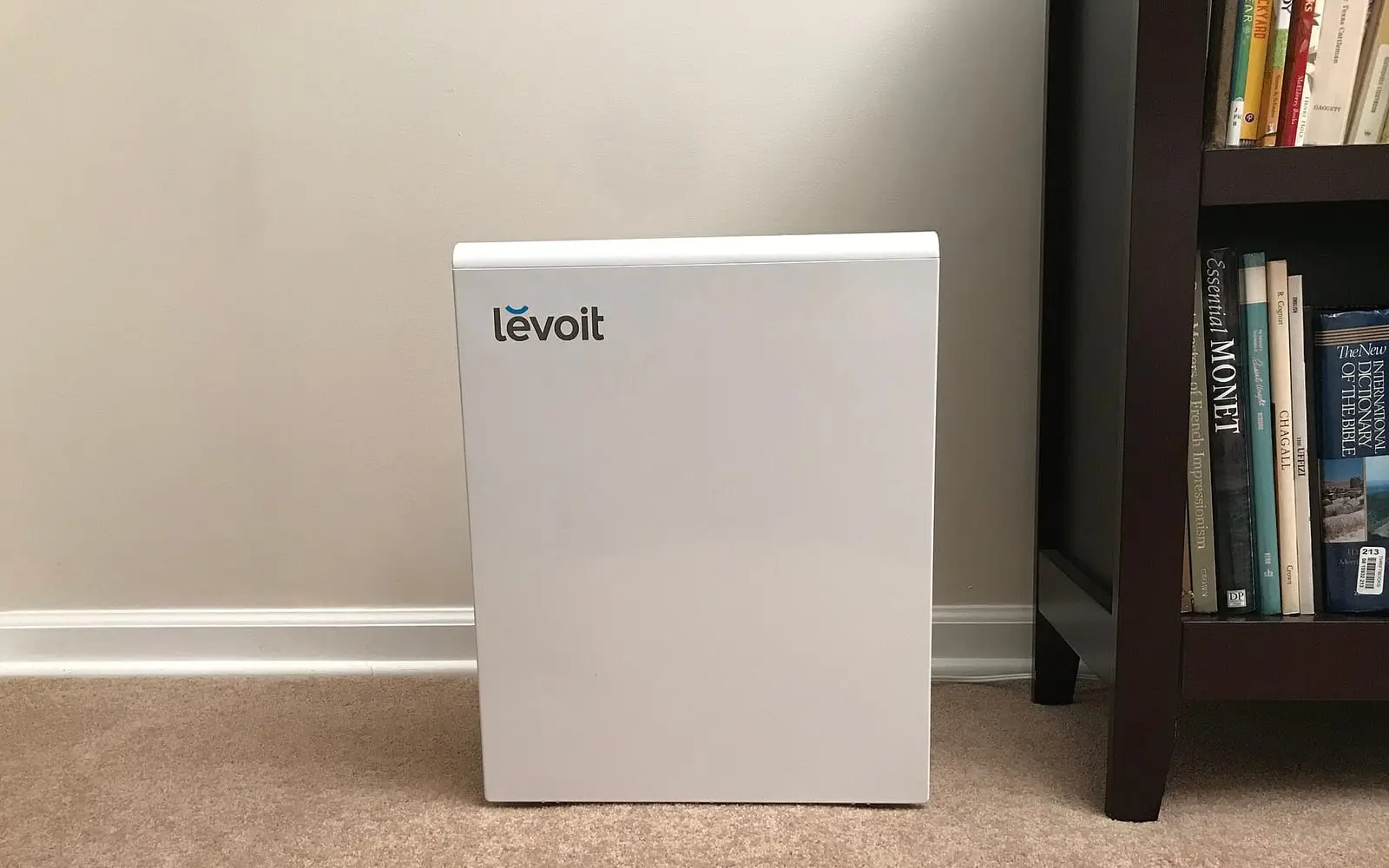
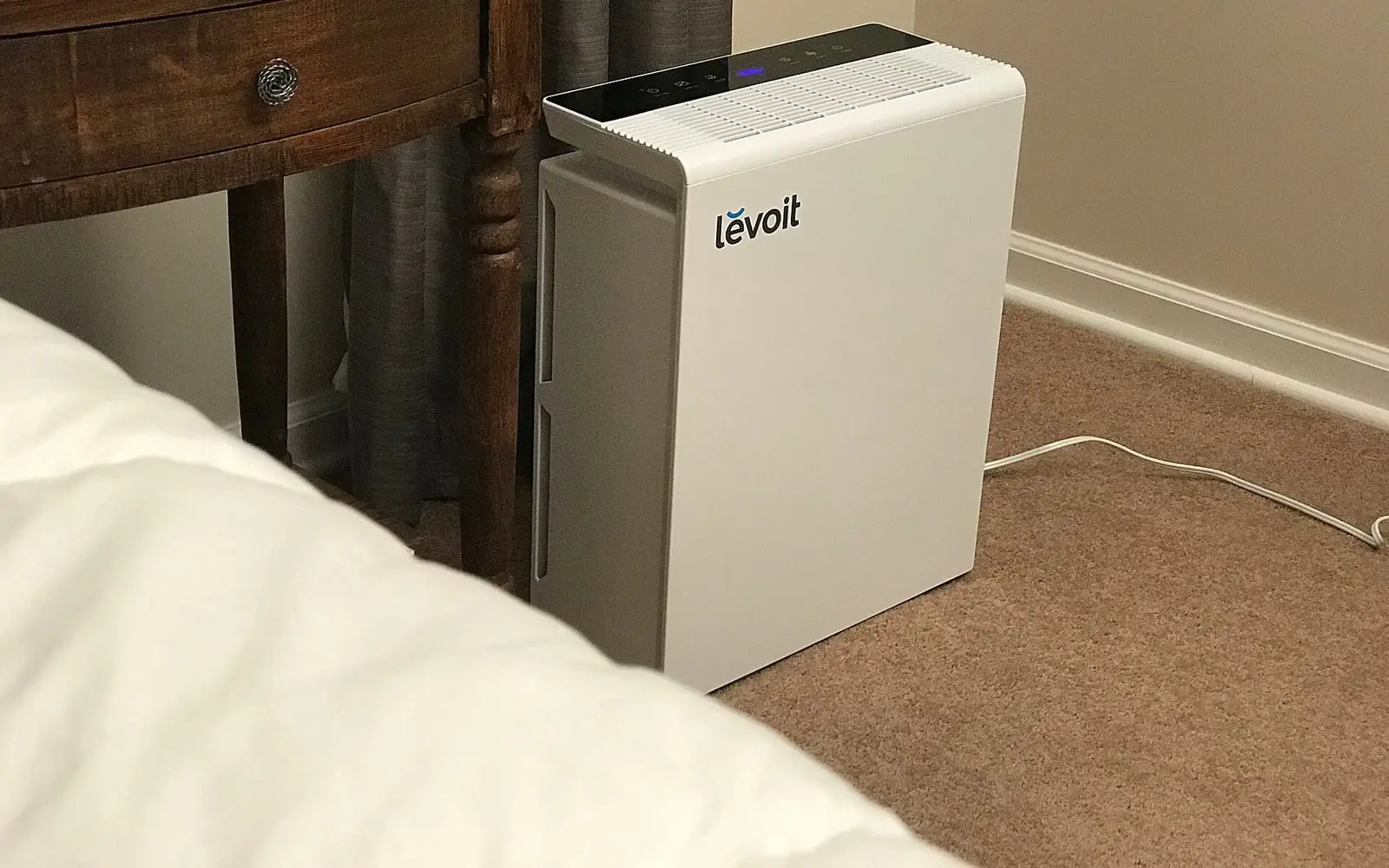
Blueair Blue Pure 211i Max: Cylindrical tower, approximately 13 x 13 x 25 inches, 14.5 lbs. The fabric pre-filter wraps around the base and comes in multiple colors (Archipelago Blue, Arctic Trail, and others), adding a design element that most purifiers lack. The overall aesthetic is clean Scandinavian minimalism — it looks like a piece of modern furniture rather than an appliance.
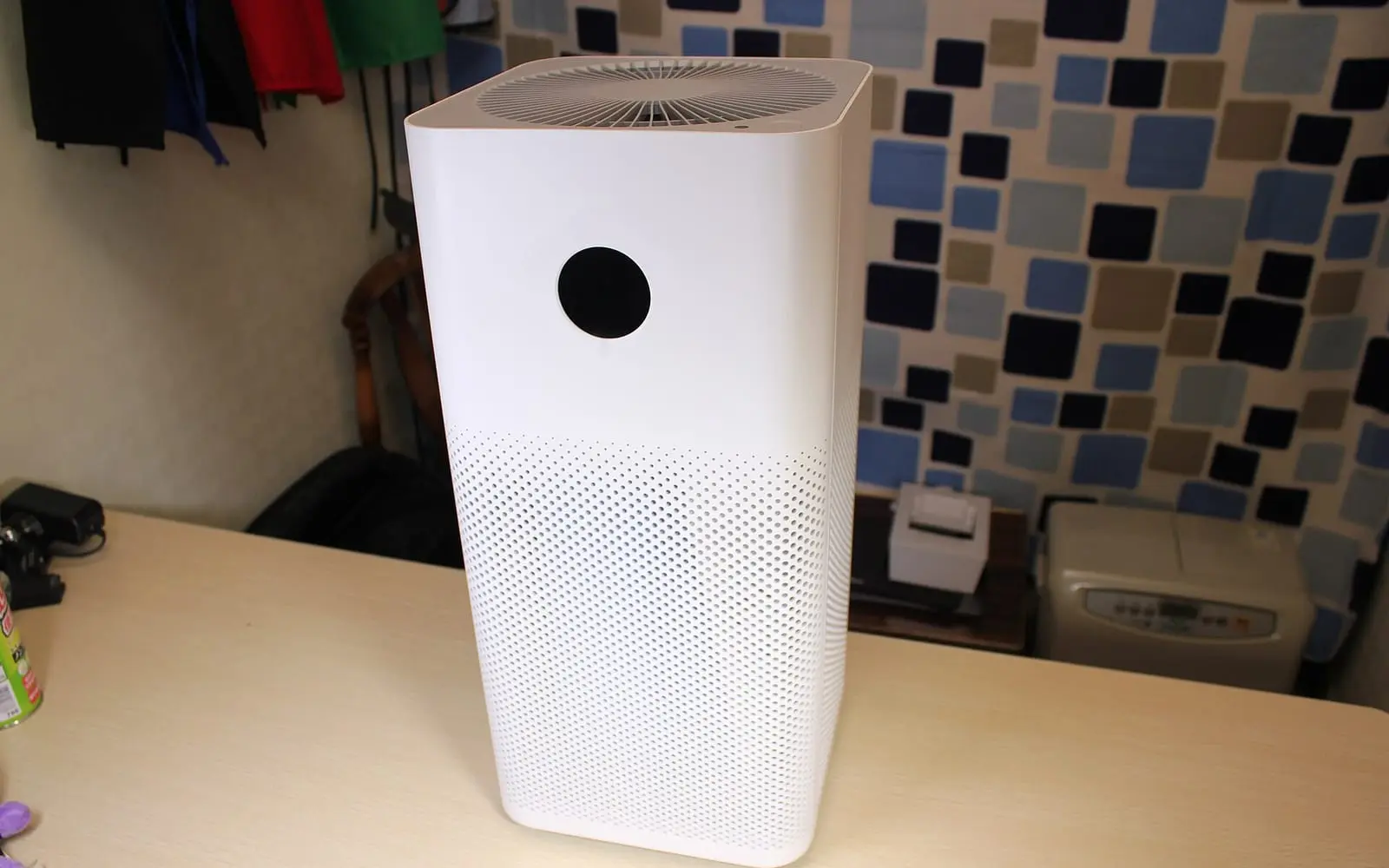
Coway Airmega 200M: Compact box design, 16.8 x 9.6 x 18.3 inches, 12.3 lbs. Functional and unobtrusive in white or black, but not a design statement. The compact footprint fits easily on shelves, tables, or floors. It’s smaller than the Blueair despite the similar weight.
The Blueair is taller and wider but has a more attractive design. The Coway is more compact and easier to place in tight spaces. For visible living room placement, the Blueair looks better. For tucking into a corner or placing on a shelf, the Coway’s smaller footprint is more practical.
Filter Costs and Maintenance
Blueair Blue Pure 211i Max:
- Combination filter (HEPA + carbon): $60-$80
- Replacement cycle: Every 6 months
- Annual filter cost: Approximately $120-$160
- Fabric pre-filter: $15-$20 (washable, replace annually)
Coway Airmega 200M:
- HEPA filter: $35-$45
- Carbon filter: $15-$20
- Replacement cycle: Every 12 months
- Annual filter cost: Approximately $50-$65
- Pre-filter: Washable, no replacement needed
Coway’s filter costs are roughly half of Blueair’s — a significant long-term advantage. Over 5 years, expect to spend approximately $250-$325 on Coway filters versus $600-$800 on Blueair filters. This is the Blueair’s biggest weakness: the high filter replacement cost erodes the value proposition over time.
5-Year Total Cost of Ownership
Blueair Blue Pure 211i Max:
- Purchase: $300-$350
- 5-year filters: $600-$800
- Total: $900-$1,150
Coway Airmega 200M:
- Purchase: $150-$180
- 5-year filters: $250-$325
- Total: $400-$505
The Coway costs less than half the Blueair over 5 years. However, the Blueair covers nearly twice the room area and includes smart features. If you need large-room coverage, the Blueair’s total cost is reasonable for what it delivers. If your room is under 360 sq ft, the Coway is the dramatically better value.
Fair Fight: Blueair Blue Pure 211i Max vs Coway Airmega 400
For a more size-matched comparison, the Coway Airmega 400 ($350-$500) competes directly with the Blueair 211i Max on coverage:
Coway Airmega 400: Covers 1,560 sq ft with dual Max2 filters, CADR of approximately 400 CFM. Uses two HEPA filters in a unique dual-intake design. The 400S model adds WiFi and the IoCare app. Price: $350-$500 depending on model (400 vs 400S).
At this level, the Coway Airmega 400 actually covers more area (1,560 vs 635 sq ft) with comparable CADR. The 400S model matches the Blueair on smart features. Filter costs for the Airmega 400 are higher than the 200M (two filters to replace) but still competitive with Blueair. The Airmega 400 is the better large-room value, though it’s a larger, more expensive unit than the 200M.
If you’re choosing between the Blueair 211i Max and the Coway Airmega 400S at similar price points, the Coway covers more space with comparable smart features. The Blueair has a more attractive design and slightly quieter operation per CFM.
Who Should Buy Blueair
- You need large-room coverage (400-635 sq ft) in a single unit
- Quiet operation at high airflow is a priority — HEPASilent delivers exceptional noise-to-CADR ratio
- You want WiFi, app control, and voice assistant integration
- Design matters — the fabric pre-filter and Scandinavian aesthetic look great in living spaces
- You want ultrafine particle capture (0.1 microns vs standard 0.3 microns)
- You’re willing to pay higher filter costs for the performance and design advantages
Who Should Buy Coway
- Value is the priority — the Airmega 200M delivers premium filtration at $150-$180
- Your room is under 360 sq ft (bedrooms, offices, nurseries)
- Low filter costs matter — Coway’s annual filter expense is roughly half of Blueair’s
- You want the option to disable ionization (Vital Ion toggle vs Blueair’s always-on electrostatic charging)
- You prefer a compact, unobtrusive design that fits anywhere
- You want a 3-year warranty (vs Blueair’s 1-year limited warranty)
- You trust the most-recommended air purifier in independent testing
Frequently Asked Questions
Q: Is Blueair better than Coway for allergies?
Both are excellent for allergies. Blueair’s HEPASilent captures particles down to 0.1 microns (vs Coway’s 0.3 microns), which provides a theoretical edge for the smallest allergen particles. In practice, both remove the vast majority of common allergens — pollen, dust mites, pet dander, and mold spores are all well above 0.3 microns. For most allergy sufferers, the difference is negligible. Choose based on room size: Blueair for large rooms, Coway for medium rooms.
Q: Why are Blueair filters so expensive?
Blueair’s combination filters integrate the HEPA and carbon layers into a single unit with the electrostatic charging technology, making them more complex to manufacture. The 6-month replacement cycle (vs 12 months for most competitors) doubles the annual cost. This is the primary criticism of Blueair purifiers — excellent performance undermined by high ongoing costs. Third-party filters are available at lower prices but may not maintain the same HEPASilent performance.
Q: Does Blueair’s ionizer produce ozone?
Blueair’s HEPASilent technology uses electrostatic charging, which is a form of ionization. The 211i Max is CARB-certified and produces ozone levels well below the California safety threshold (0.050 ppm). However, unlike Coway’s Vital Ion, Blueair’s electrostatic charging cannot be disabled — it’s integral to the HEPASilent filtration process. If you want zero ionization, Coway with Vital Ion turned off is the better choice.
Q: Which is better for a bedroom?
Coway Airmega 200M is the better bedroom purifier for most people. It’s more compact, slightly quieter on low (24 dB), costs less, and covers a typical bedroom easily. The Blueair 211i Max is overkill for most bedrooms — its 635 sq ft coverage is wasted in a 150-200 sq ft room. However, if you want app control to adjust settings from bed, the Blueair’s WiFi connectivity is a nice convenience.
Q: Can I use the Coway Airmega 200M in a large living room?
The 200M is rated for 361 sq ft, so it will struggle in rooms significantly larger than that. For living rooms over 400 sq ft, consider the Coway Airmega 400 (1,560 sq ft coverage) or the Blueair 211i Max (635 sq ft). Running the 200M in a room that’s too large means the air won’t be fully cleaned between cycles, reducing effectiveness.
The Verdict
These are both outstanding air purifiers, but they serve different needs. The Coway Airmega 200M is the better choice for most people — it delivers proven, independently verified air cleaning at an unbeatable price, with the lowest filter costs in the category and a 3-year warranty. For bedrooms, offices, and rooms under 360 sq ft, nothing beats the Coway’s combination of performance, value, and reliability.
The Blueair Blue Pure 211i Max is the better choice for large rooms and buyers who want the full smart purifier experience. Its 635 sq ft coverage, WiFi connectivity, and impressively quiet operation at high airflow make it the strongest option in the $300-$350 range for open-concept spaces. The high filter costs are a real drawback, but the performance and design justify the premium for the right buyer.
Short version: Coway for value and medium rooms. Blueair for large rooms and smart features. You genuinely can’t go wrong with either brand.
Specs and prices are checked against manufacturer documentation and current retail listings at the time of writing and can change. Read how we test and our editorial policy. Spotted an error? Tell us.